



Lunar New Year is rewriting the playbook for ocean and air freight

As sure as the sun rises in the east and sets from the west, the Lunar New Year (LNY) casts its annual shadow across global supply chains once more. Factories pause, workers travel home, and Asia’s export engines momentarily fall silent.
As usual, in the weeks leading up to the holiday, the region pulses with urgency. Demand surges, capacity tightens, and both ocean and air freight markets feel the full weight of Asia Pacific’s central role in global trade.
In 2026, the familiar rhythms of LNY meet an environment marked by geopolitical unrest, weather‑driven disruptions, and structural constraints across both transport modes. “We are entering a season that feels less like a predictable peak and more like a pressure test for supply chains worldwide,” said Niki Frank, CEO, DHL Global Forwarding Asia Pacific.
Asia Pacific demand sets the tempo
Across both air and ocean markets, Asia Pacific remains the anchor of global demand growth. Airfreight data shows that ex‑Asia volumes surged 10 percent year‑on‑year in December 2025, leading all regions in growth as 2026 began. These increases were reflected in strong fundamentals across technology, e‑commerce, and pharmaceuticals.
On the ocean side, DHL’s Ocean Freight Market Update shows 5 percent year‑to‑date demand growth through November 2025, driven almost entirely by Asia‑origin trades into Europe, MENAT, IPBC, and Africa. Secondary trades such as Asia–Africa and Asia–Indian Subcontinent continue to outperform, underscoring the diversification of global supply chains in the region.
The LNY effect amplifies these patterns. Shippers rush to move goods before factory closures, creating sharp, predictable peaks. Yet this year’s surge collided with an already strained system.
Capacity: Growing, but never enough
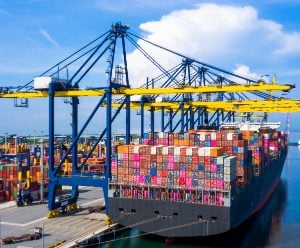
On the ocean freight front, nominal capacity is projected to grow just 3 percent in 2026, half of the typical 6 percent average seen over the past decade. Effective capacity is even more constrained: Suez diversions, port congestion, and weather disruptions have cut usable supply by approximately 15 percent.
In North Asia, ports like Shanghai, Ningbo, and Qingdao experienced congestion that was intensified by winter storms and surging pre‑holiday demand. At the same time, severe winter conditions in Europe slowed major hubs like Hamburg and Rotterdam, contributing to global bottlenecks.
“The result of these market forces is that capacity looks sufficient on paper, but is significantly less reliable in practice,” noted Bjoern Schoon, Senior Vice President, Ocean Freight, DHL Global Forwarding Asia Pacific.
The airfreight market is facing similar headwinds. While airfreight capacity grew 5 percent year‑on‑year in January 2026, supported by a mix of freighter expansions and passenger belly recovery, it was not enough to fully offset seasonal tightening. Much of the added capacity was quickly absorbed by LNY pre‑builds, while structural shortages – especially in long‑haul widebody freighters – continue to loom through 2027–2028.
Asia at the Center of a Global Backlog
Linerlytica’s February 2026 data show that global port congestion climbed to 3.31 million TEU, tying up almost 10 percent of the global fleet, with North Asia accounting for 44 percent of total congestion. This concentration of bottlenecks near Asia’s manufacturing bases means any seasonal spike – like LNY – creates ripple effects across every major trade lane.
Schedule reliability gains from early 2025 faded as winter approached. The Ocean Freight Market Update notes that reliability stalled across nearly all trade lanes. Similar pressures hit air networks, as severe weather in Amsterdam triggered flight cancellations and cargo restrictions just as LNY demand rose.
These combined factors transformed what would typically be a predictable seasonal peak into a much sharper supply compression.
Rates: A Tale of Two Modes
Ocean rates followed the classic LNY trajectory – up sharply in the weeks before, then falling as the holiday approaches – but with a twist. The Shanghai Containerized Freight Index (SCFI) highlights that while rates rose 18 percent off Q3 lows, they remained 36 percent below year‑ago levels. This duality speaks to a market where seasonal momentum is meeting a softer environment.
Linerlytica adds sharper details: transpacific spot rates slipped below US$1,900/FEU to the U.S. West Coast and US$2,600/FEU to the East Coast in early February as carriers withdrew planned increases.
Airfreight saw its own rebound. Global rates rose +1 percent week‑on‑week in week 3 of 2026, driven by a +4 percent week-on-week jump in Asia Pacific origins, even as Asia–Europe spot rates dipped 3 percent week-on-week. Spot rates between Asia Pacific and U.S. saw a 3 percent increase, showing a divergence between the trade lanes for the two continents.

Volatility remains the norm
Both ocean and air freight markets in Asia Pacific are entering 2026 with resilience – but also with vulnerabilities. LNY intensifies these dynamics, revealing a market where small shocks quickly cascade through tightly interlinked global networks.
Red Sea instability continues to dominate the conversation around vessel deployment. Less than 15 percent of in-scope sailings use the Suez Canal, with almost 80 percent of Suez transits occurring as carriers maintain Cape of Good Hope rerouting for safety.
Regulatory changes are also at play: the EU’s carbon pricing mechanisms (ETS and CBAM) heighten cost pressures for APAC exporters, while Egypt’s ACI mandate introduces new compliance requirements for air cargo.
For shippers, the message is clear: the old playbook is no longer enough. In today’s environment of geopolitical uncertainty, weather disruption, and shifting demand patterns, proactive planning, diversified routings, and flexible modal strategies are essential.
“Asia Pacific remains the center of gravity for global freight – and in 2026, it is reshaping how the world prepares for its most important annual supply chain event,” noted Frank.
ALSO WORTH READING







 English