



Ocean freight’s next challenge: managing the transition

Key takeaways
- Ocean freight is shifting from disruption management to transition management.
- More capacity does not automatically mean more usable or reliable capacity.
- The winning strategy for 2027 is flexibility, not predicting rates.
In recent years, the ocean freight playbook was relatively straightforward.
The focus was on disruption management: securing capacity, preparing for longer transit times, building buffers and finding alternative routes.
After years of reacting to disruption, ocean freight is entering a different kind of uncertainty. Some of the pressures that defined recent years are beginning to shift shape rather than disappear. Services are gradually returning to the Suez Canal. New vessels continue to enter the global fleet.
Yet congestion persists, demand remains strong on some trades, and freight rates are moving differently depending on where cargo is headed.
For shippers, this may require a different approach: transition management.
“The question is no longer simply how to respond to the next disruption. It is how to make decisions while the market itself is still adjusting,” said Niki Frank, CEO, DHL Global Forwarding Asia Pacific.
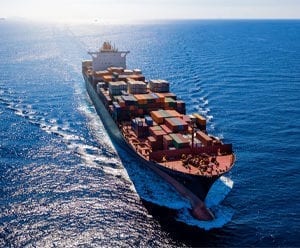
The Suez Canal is changing the capacity equation
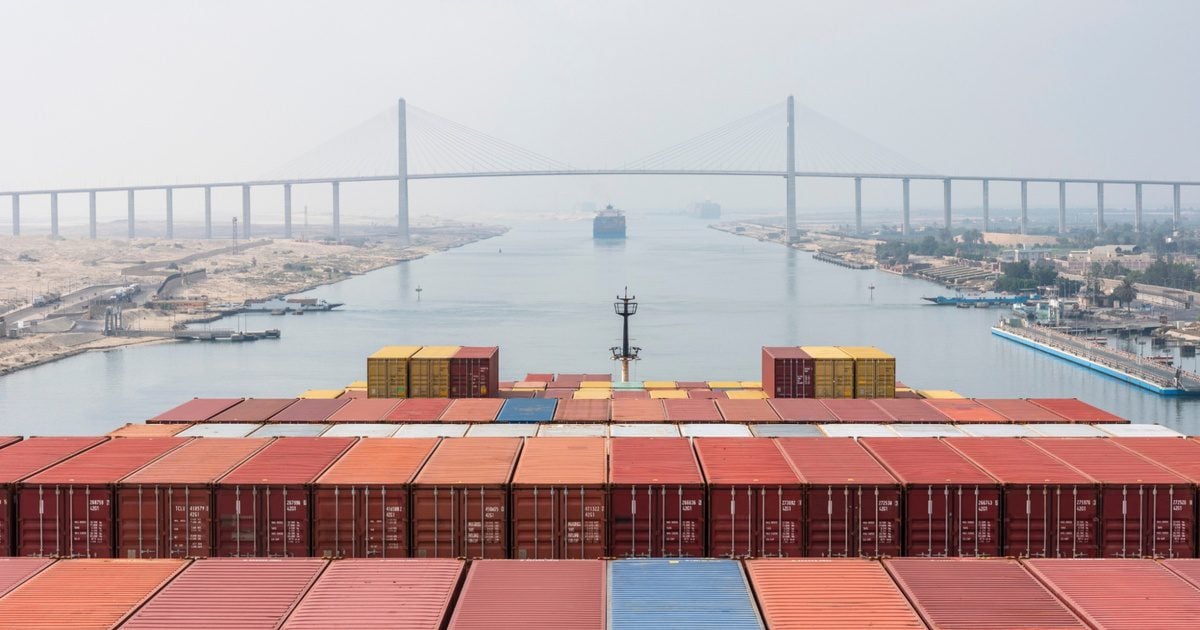
The gradual return of Asia-Europe services to the Suez Canal is perhaps the clearest example of this transition.
But this is not a switch that carriers can simply flick back on.
The return remains uneven. Around 60 percent of relevant Asia-Europe headhaul services are currently planned through Suez, with significant differences between Asia-North Europe and Asia-Mediterranean services.
That leaves a significant number of vessels operating via the longer Cape of Good Hope route, even as other services return to Suez. Broader network adjustments could take another 6 to 12 months, assuming security conditions do not force carriers to change course again.
Shorter voyages through Suez gradually release ships that had effectively been absorbed by longer Cape routings. That increases effective capacity without carriers necessarily adding another vessel.
But releasing that capacity and turning it into predictable services are two different things.
“Carriers must reposition ships, rebalance schedules and manage services operating across different routings. Ports and inland transport networks then need to absorb those changing arrival patterns,” said Bjoern Schoon, Senior Vice President, Ocean Freight, DHL Global Forwarding Asia Pacific. “The return to the Suez Canal can shorten the sailing. It cannot eliminate the bottlenecks waiting at either end.”
More ships, but where will the capacity go?
The November Ocean Freight Market Update expects global fleet capacity to expand about 4 percent year over year in 2026. At the same time, congestion continues to absorb more than 10 percent of the global fleet, or roughly 3.6 million TEU.
Meanwhile, Linerlytica’s latest market assessment puts global containership orders at 6.4 million TEU year to date, taking the orderbook to 47.8 percent of today's active fleet.
Put these forces together and the capacity question becomes more complicated.
The industry has spent much of the past few years worrying about having too few ships and too little space. Heading into 2027, the question could increasingly become where additional vessel capacity is deployed and whether it translates into usable capacity for shippers.
A larger global fleet does not necessarily mean plentiful space for every shipper. Demand can remain strong on individual corridors. Congestion can remove vessels from productive service. Carriers can also manage excess capacity through blank sailings, network changes and vessel redeployments.
In other words, capacity on paper is not always capacity a shipper can use.
There is no single freight-rate story
The same divergence is emerging in rates.
On Asia-Europe trades, pricing pressure is beginning to build as the capacity picture changes. November rate-increase attempts have struggled to gain traction and softer indications are emerging. Yet utilization and demand remain supportive, making it too early to describe this as a broad market correction.
Across the Pacific, the picture is different.
The US West Coast remains comparatively firm, with the DHL November Update pointing to resilient underlying demand, even as seasonal cargo pressures show signs of easing and carriers continue using blank sailings to manage capacity.
The Middle East tells yet another story, according to Linerlytica. Strong demand and severe congestion are continuing to support rates, with berth delays at some Gulf gateways exceeding two weeks.
For an Asia Pacific shipper, then, asking whether ocean freight rates are “going up or down” may increasingly be the wrong question.
The more useful question is: What is happening on the trade lane my cargo uses?
Reliability remains part of the equation
Additional vessel capacity would normally be welcome news for shippers. But more ships do not automatically make shipping more predictable.
The millions of TEUs currently caught up in congestion demonstrate why.
A ship can take a shorter Suez route and still encounter a congested destination port. Space can increase on one service while blank sailings reduce it on another. A lower freight rate can quickly lose its advantage if unreliable arrivals force a business to carry more inventory or build additional time into its supply chain.
That makes reliability an important part of the transition.
The challenge is not simply having enough ships in the global fleet. It is having the right capacity, on the right trade, at the right time, with a schedule shippers can plan around.
A different playbook for 2027
During periods of severe disruption, the priority was often defensive: secure space wherever possible, protect critical shipments and build enough resilience into the supply chain to absorb the next shock.
Transition management requires more calibration. That means the ocean freight playbook for 2027 cannot be built around freight rates alone.
Shippers moving goods from Asia to Europe may gain negotiating leverage if effective capacity continues to increase. Those shipping across the Pacific could face firmer conditions for longer. Businesses using congested Middle Eastern gateways may find that operational reliability matters more than headline rate movements.
Rate management therefore needs to work alongside risk management. For shippers, that means focusing on three priorities:
- Protect business continuity with clear forecasts and volume commitments.
- Balance cost and adaptability through rolling visibility and agreed adjustments.
- Retain enough flexibility to respond to unexpected demand and, when necessary, accept market exposure.
The advantage may therefore lie less in predicting precisely where freight rates will go and more in having the flexibility to respond when capacity, reliability and pricing do not move together.
“Shippers need to have a strategy that will cover greater predictability, cost flexibility, and most importantly, the optional agility to adapt to changing situations,” noted Frank. “This is essential to create supply chain resilience, which has increasingly become a top priority for businesses.”
MORE FROM THIS COLLECTION



 English