



The early freight peak is here to stay

Key takeaways
- Freight markets usually have a dominant story. This year has several.
- Holiday inventory replenishment is underway. New Energy supply chains are generating strong export volumes. Manufacturers are accelerating shipments. Tariff uncertainty is influencing buying decisions. Congestion is reducing available capacity.
- Together, these forces are creating an unusually crowded export calendar that is tightening both ocean and air freight networks well before the traditional peak season reaches its highest point.
Look across today’s freight market and a curious pattern emerges.
“Traditionally, freight demand builds gradually in the second half of the year as retailers replenish inventories ahead of major shopping events and manufacturers prepare for year-end demand. Capacity tightens, rates rise, and competition for space intensifies,” said Niki Frank, CEO, DHL Global Forwarding Asia Pacific. “This year, those familiar pressures are emerging earlier—and for reasons that extend far beyond traditional seasonal cycles. An intense and prolonged peak season is already underway due to the convergence of several demand drivers.”
Across major export hubs, vessel utilization is climbing, congestion is worsening, and capacity is becoming harder to secure. The freight situation is largely driven by holiday inventory replenishment, an increase in New Energy exports, and U.S. importers bringing cargo forward ahead of tariffs uncertainty.
Why tariffs still matter
Although tariffs are not the dominant force shaping today’s freight market, they remain an important contributor.
The upcoming 24 July expiration of the U.S. 10 percent Section 122 tariff has introduced uncertainty into procurement and sourcing decisions. Importers know what current tariffs look like. What they do not know is what comes next—or how additional costs might be introduced from future measures.
Some shippers are responding by moving cargo earlier, preferring the certainty of today’s tariff environment over the uncertainty of tomorrow’s. The result is additional demand layered on top of already strong freight flows driven by manufacturing exports and inventory replenishment
That additional demand matters because freight markets are already operating close to capacity. In ocean freight, it reinforces upward pressure on rates that are already elevated. In air freight, it adds another planning variable to a market where rates remain well above last year’s levels and capacity is being deployed selectively.
A multi-faceted story for the freight market
Tariffs, however, are one of the reasons behind the freight surge, amplifying a market that is under strain.
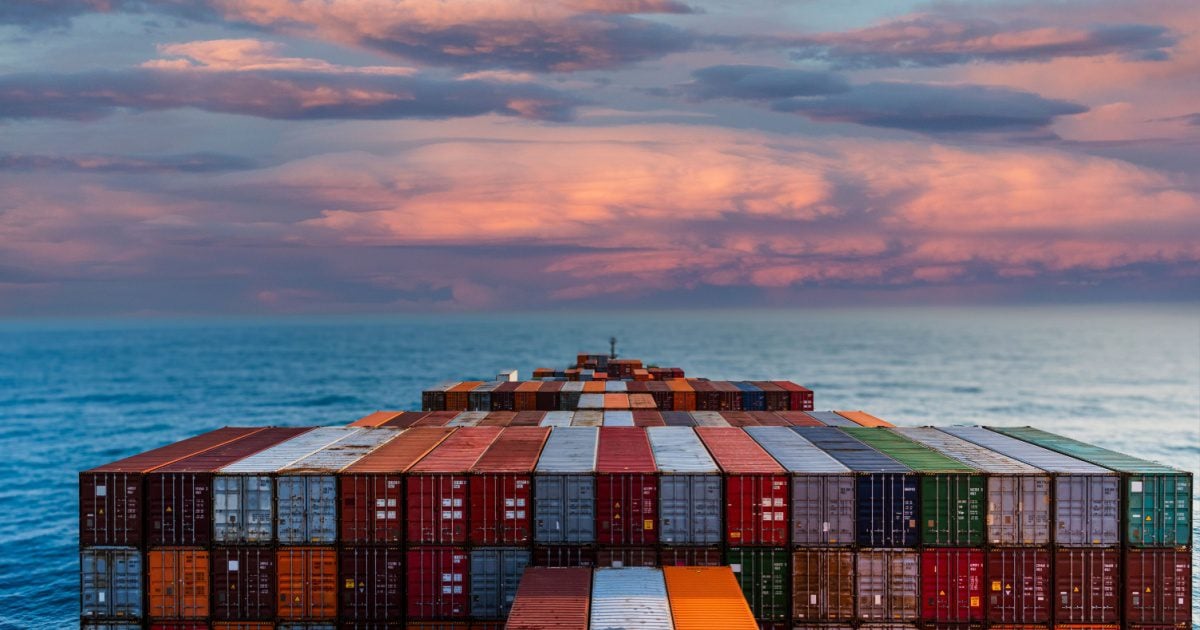
Manufacturing exports continue to flow despite geopolitical uncertainty and shifting trade relationships. At the same time, some importers are accelerating purchases to reduce their exposure to future tariff changes.
“Individually, each of these developments would be manageable,” said Bjoern Schoon, Senior Vice President, Ocean Freight, DHL Global Forwarding Asia Pacific. “Collectively, they are creating a market where demand is growing faster than what capacity can comfortably absorb.”
That imbalance is showing up not only in tighter space, but also in pricing. Ocean freight rates have risen 84 percent year-on-year, while demand continues to outpace available capacity.
That tension is also showing up in air freight rates. DHL’s June Air Freight State of the Industry notes that global air freight spot rates rose to US$3.75 per kilogram in week 25 of 2026, remaining 47 percent above last year’s levels, reflecting volatility, capacity uncertainty, high jet fuel prices, and risk surcharges.
New Energy is adding a new layer of freight demand
One of the biggest changes shaping logistics networks today is the rise of New Energy supply chains, and the scale of that growth is becoming increasingly visible.
China’s exports of solar products, batteries, and electric vehicles reached US$21.9 billion in March 2026, up 70 percent year-on-year, according to analysis of customs data by Ember. Solar exports increased 84 percent, lithium-ion batteries rose 69 percent, and EV exports climbed 65 percent during the same period.
Reuters reported that Chinese manufacturers are rapidly expanding battery energy storage production as utilities and industries invest in greater renewable energy capacity and grid resilience. Citing Rystad Energy forecasts, the report noted that battery exports for energy storage are expected to increase 30 percent to 150 GWh in 2026.
China’s domestic production data tells a similar story. The Centre for Research on Energy and Clean Air reported that battery output increased 55.6 percent year-on-year in April 2026, supported by growing export demand and energy storage deployment.

For freight markets, this matters because New Energy cargo does not follow the same calendar as traditional retail demand.
Batteries, energy storage systems, solar equipment, and industrial energy infrastructure move according to project timelines, investment cycles, and deployment schedules. Rather than replacing existing freight demand, they are creating an additional layer of cargo that remains active throughout the year.
As a result, logistics networks are entering peak season with less spare capacity than they once had. When New Energy exports are layered on top of holiday inventory builds and manufacturing shipments, freight rates become a signal of compression across the network: more cargo competing for space that is already constrained.
Port congestion remains part of the challenge
Demand is growing particularly strongly on Asia-origin trade lanes, with year-to-date intra-Asia volumes up 10 percent, Asia–Europe up 12 percent, and Asia–Oceania up 17 percent. Even as tariffs reshape sourcing decisions, trade volumes continue shifting rather than disappearing.
That trend aligns with a broader conclusion from the 2026 DHL’s Global Connectedness Report: globalization is adapting rather than retreating. Supply chains are becoming more diversified, but goods continue moving across borders at scale.
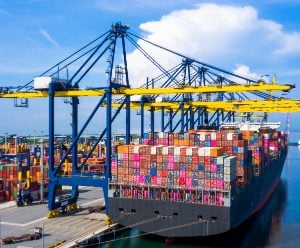
A growing demand with limited capacity has revealed an increasingly visible impact on ports.
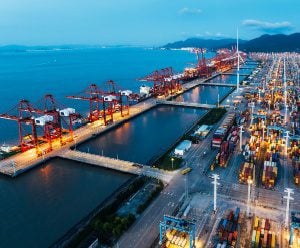
DHL’s Ocean Freight Market Update shows more than 3.7 million TEU tied up in congested ports globally in late June, with congestion levels returning to heights last seen during the post-pandemic period. The surge is being driven primarily by Asia and Europe, rather than North America. Recent export spikes from Asia have contributed to loading congestion at major gateways, including Shanghai.
The consequence is a market where freight feels tighter than fleet growth figures alone would suggest. While global container fleet growth is expected to reach 4 percent in 2026, effective capacity remains constrained by congestion and ongoing network disruptions.

Air freight is telling a similar constraint story
DHL’s Air Freight State of the Industry report highlights a remarkably similar dynamic. Airline networks continue recovering and capacity continues to grow, yet availability remains tight on many major trade lanes. Airlines are concentrating capacity on the highest-demand corridors while aircraft delivery delays and a global order backlog of more than 18,000 aircraft continue limiting supply growth.
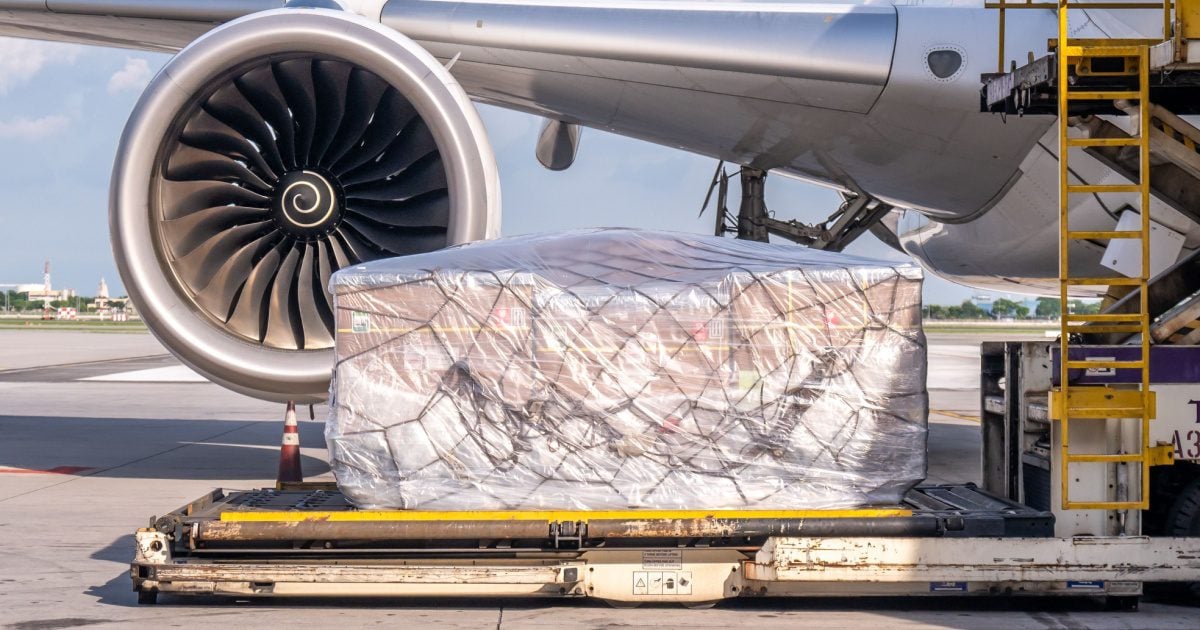
Technology-related shipments continue supporting demand. The report notes ongoing strength in semiconductor and advanced manufacturing supply chains, while continued AI-related demand is contributing to capacity pressure. At the same time, manufacturers, industrial exporters, and e-commerce shippers continue competing for available space.
In many ways, the air market mirrors what is happening at sea.
Capacity is growing. Demand is growing faster.
From batteries and energy storage equipment moving through ocean networks to semiconductors, electronics, and industrial components moving by air, multiple cargo streams are arriving simultaneously and competing for logistics capacity. “When available capacity is concentrated on higher-demand corridors, price increases become less of a surprise and more of a reflection of how tight networks are being used,” said Fabio Weiss, Senior Vice President, Air Freight, DHL Global Forwarding Asia Pacific.
A market defined by convergence
Freight markets have often been shaped by a single defining story. Today’s market feels different with a convergence of forces.
Holiday inventory replenishment ahead of tariffs uncertainty, New Energy exports, manufacturing demand, semiconductor shipments, combined with capacity constraints and congestion—each contributes part of the story.
“Together, they help explain why peak season have arrived early—and why the competition for freight capacity may remain intense well beyond the summer months,” noted Frank.
MORE FROM THIS COLLECTION





 English