



Freight volatility led by energy shocks and capacity constraints
Key takeaways
- Asia Pacific trade demand remains strong, but freight movement is harder due to persistent disruption, longer routes, and reduced usable capacity.
- Fuel volatility, port congestion, and rerouting are raising ocean and air freight costs while weakening schedule reliability.
- Shippers must prioritize flexibility, inventory buffering, and multimodal planning over lowest-cost strategies to stay resilient.
Asia Pacific continues to play a major role in global trade in 2026, but moving goods around the region has clearly become harder.
What once felt like a series of short disruptions has turned into something more permanent. Fuel prices remain elevated and volatile. Geopolitical risks continue to push ships and aircraft onto longer routes. Capacity exists in headline numbers, but much less of it is usable in practice.
“Nonetheless, trade has not slowed in any dramatic way. Demand is still there,” said Niki Frank, CEO, DHL Global Forwarding Asia Pacific. “However, many shippers are reassessing how robust their supply chains really are, in light of the increased effort and cost needed to move freight reliably.”
Asia Pacific demand maintains a steady hand
The contrast between global and regional trends helps explain why Asia Pacific still stands out. Based on DHL’s Air Freight State of the Industry, global air cargo volumes in March 2026 fell by about 4 percent year-on-year, largely because disruptions at Gulf transit hubs slowed flows across multiple long‑haul corridors. Within Asia, however, freight kept moving. Intra‑Asia air cargo grew by roughly 7 percent year-on-year, supported by steady demand for electronics, consumer goods, and components moving between production centers.
Ocean freight shows a similar pattern. Global container demand is growing, but exports out of Asia are doing most of the work. The DHL Ocean Freight Market Update shows volumes (based on TEU) from Asia are up about 7 percent year-to-date in 2026, compared with much softer trends in Europe and North America. This steady demand, combined with constrained supply, is shaping nearly every decision that carriers and shippers make this year.
Ocean freight entering a new normal
The biggest shift in ocean freight today is that disruption is no longer temporary. Longer routings, higher fuel costs, and port congestion are now part of everyday planning. “To manage this, shippers need to move away from fixed assumptions and build flexibility into how they route cargo, manage inventory, and secure capacity,” said Bjoern Schoon, Senior Vice President, Ocean Freight, DHL Global Forwarding Asia Pacific. “Early planning, diversified routing options, and closer coordination with carriers and forwarders have become essential to maintaining reliability in a volatile market.”
In ocean freight, the issue is not vessel deliveries. New ships ordered during the pandemic continue to join the global fleet, pushing nominal container capacity up by around 3 percent year-on-year in 2026. The real problem is effective capacity. Continued diversions away from the Suez Canal and around the Cape of Good Hope have absorbed a large share of available tonnage. When port congestion and slow steaming are added, industry estimates suggest usable capacity is lower than fleet numbers indicate.
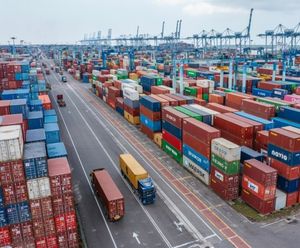
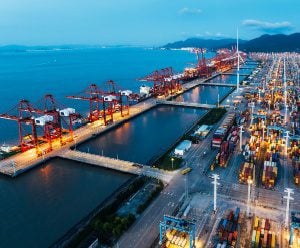
Port congestion remains a major part of this picture. At any given time, close to 3 million TEU are tied up in congested ports worldwide. North Asia and Southeast Asia remain among the most affected regions, as high yard density and limited inland capacity slow container turnaround. Even small delays at major gateways quickly cascade into equipment shortages and missed connections further down the supply chain.
For exporters in Asia Pacific, this shows up first in transit times. Asia–Europe sailings are still taking about 10 to 14 days longer than before diversions began, with vessels continuing to avoid the Red Sea. Equipment availability has become more uneven, particularly during periods of port congestion. A shift in vessel strategy has become apparent, as carriers have been favoring large vessels (10,000 to 15,000 TEU) to achieve greater economies of scale across various trade routes.
Inland transport is also under pressure, as slower port operations reduce trucking productivity and stretch rail schedules.
Reliability has improved only slightly. Blank sailings and omitted port calls are common tools carriers use to manage fuel costs and vessel utilization. Slow steaming, which reduces fuel burn but extends transit times, has also recently become more widespread amid elevated oil prices. Even when space is booked, shipments are more likely to arrive later than planned.
A reality check on rates
Meanwhile, rates are currently influenced more by capacity control than pure demand. By April 2026, the Shanghai Containerized Freight Index (SCFI) was roughly 40 percent higher than a year earlier. Futures markets suggest further increases through the second quarter, in some cases pointing to more than 50 percent upside as bunker surcharges are still being phased in. While some Asia–Europe corridors show signs of stabilizing, costs remain elevated, especially where Gulf‑bound cargo is being rerouted via Mediterranean ports and competing for the same capacity.
Demand from Asia remains strong, driven by semiconductors, artificial intelligence servers, advanced electronics, and pharmaceuticals. These products create a steady base of air cargo demand because they are high‑value and time‑sensitive. Even when consumer demand softens elsewhere, these flows tend to continue.
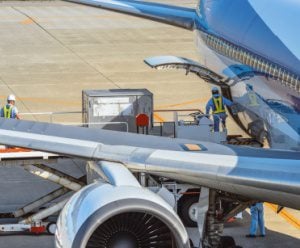
Capacity, in particular, has tightened sharply. By late April 2026, outbound air cargo capacity from Gulf hubs was nearly 39 percent lower than a year earlier. This disruption has forced airlines to reorganize their networks, which had relied on Middle Eastern hubs for decades. More cargo is now moving on direct long‑haul services or via alternative routings across Central and South Asia, often at higher cost.
The impact is most visible on Asia–Europe lanes. Air cargo volumes on that corridor fell by around 11 percent year-on-year in March as higher fuel costs and fewer routing options limited available lift. Asia–North America lanes held up better, remaining broadly flat, supported by direct services and recovered passenger belly capacity. Within Asia, air freight continued to grow, once again acting as a buffer against disruption elsewhere.
“In air freight, capacity constraints and fuel volatility mean speed can no longer be taken for granted. The smartest response is prioritization,” Fabio Weiss, Senior Vice President, Air Freight, DHL Global Forwarding Asia Pacific. “Shippers need to be very clear about which goods truly require air transport and which can move through alternative modes or hybrid solutions.”
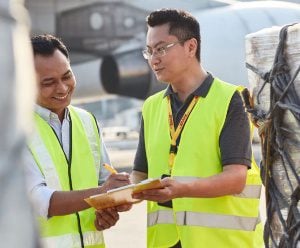
Adapting to the energy shock
Fuel has become the key constraint. Jet fuel prices more than doubled between January and April 2026, briefly nearing US$170 per barrel. In Asia and Oceania, the effect is more pronounced, with prices soaring more than US$200 in the March–April period. Elevated prices, especially in Asia with its heavy dependence on Middle East supply, will impact air freight rates for the rest of the year.
Airlines responded quickly by raising fuel surcharges, trimming frequencies, and retiring older freighters earlier than planned. Instead of adding capacity, carriers are focusing on protecting margins. As a result, air cargo supply remains tight even though demand growth is modest.
That tightness shows clearly in pricing. By April 2026, Asia‑Pacific air freight spot rates were up by 41 percent year-on-year. In the same period, the year-on-year increase for the Middle East and South Asia combined was the largest, at 65 percent. Rates have remained elevated even as volumes fluctuate, reflecting how strongly fuel costs and routing constraints are shaping the market.
Energy exposure ties these trends together. Many Asia-Pacific economies import a large share of their energy, making freight markets in the region particularly sensitive to oil price shocks. Higher crude prices quickly translate into bunker adjustments, jet fuel surcharges, slower services, and tighter capacity.
In anticipation of fuel costs rising further, signs of front-loading activity have surfaced, with an increased focus on inventory buffering reinforcing the need to adapt to further disruptions.
The volatile situation has also disrupted the traditional peak-season cycle, with early or even irregular peaks emerging in response to the geopolitical situation. As long as energy markets remain unstable, freight conditions across Asia Pacific are likely to stay unpredictable.
Resilience is no longer optional
For shippers, this changes how logistics decisions are made. The focus has shifted away from finding the lowest rate at a single point in time. Instead, the challenge is managing continuous uncertainty. Longer ocean transit times require higher safety stocks and more coordination with inventory teams. Air freight decisions need clearer prioritization, given higher costs and limited space. Shorter rate validity periods and greater reliance on spot pricing mean plans need to be revisited more often.
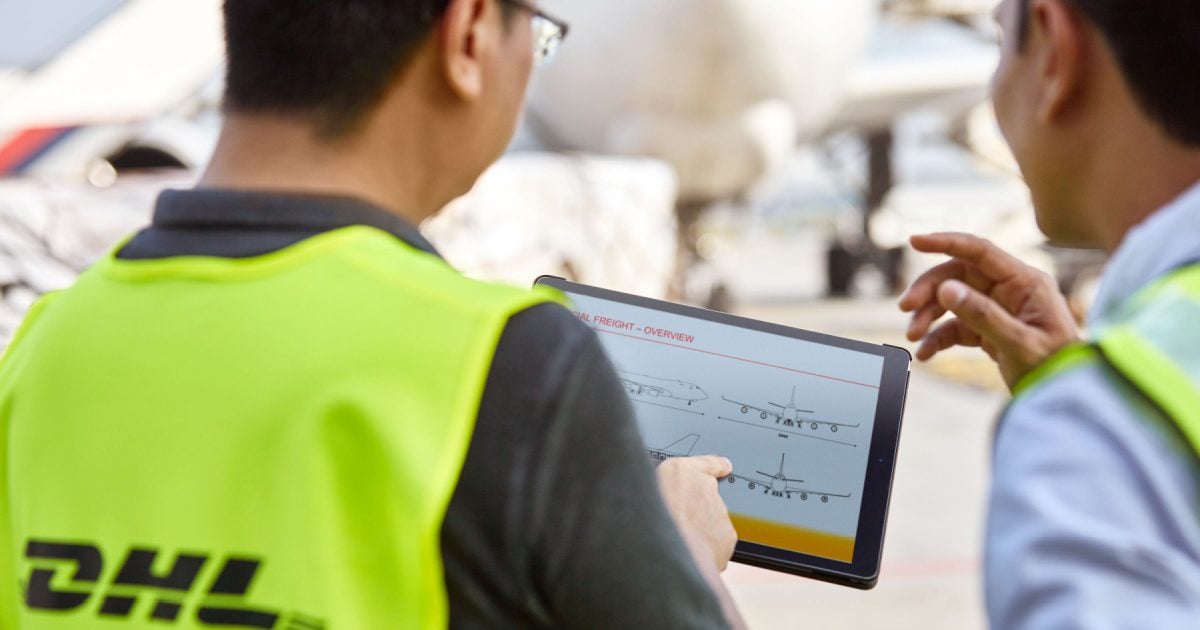
This is where the role of a freight forwarder becomes more strategic. By combining ocean, air, rail, and sea‑air solutions, shippers can manage trade‑offs between speed, cost, and reliability rather than relying on a single transport option.
Looking ahead, freight markets in Asia Pacific are not returning to old patterns. They are settling into a new operating reality. Trade continues. Regional supply chains remain active. Demand has held up better than expected.
At the same time, volatility has become part of everyday logistics. “In today’s Asia Pacific freight markets, flexibility, transparency, and resilience have become the very core principles that help shippers navigate the uncertainty in the near future,” noted Frank.




 English