



There is more to the capacity growth than meets the eye

Key takeaways
- Capacity is being redistributed across trade lanes rather than expanding evenly.
- Strong Transpacific demand, AI-driven air cargo growth, and the gradual return to the Suez Canal are influencing how carriers allocate capacity.
- Shippers need to focus on usable capacity, not headline capacity.
A freight market can have more ships and aircraft without becoming easier to navigate. On paper, capacity appears to be increasing. In reality, the market is redistributing capacity rather than adding it where shippers need it most.
Across both ocean and air freight, capacity is being redistributed differently between trade lanes while congestion, disruption, and changing demand patterns continue to influence how much capacity is effectively available.
The result is a freight environment where availability depends less on capacity numbers and more on where that capacity is deployed.
“For shippers, the key question is no longer whether capacity exists,” said Niki Frank, CEO, DHL Global Forwarding Asia Pacific. “It is whether it is available on the right trade lane, in the right equipment pool, and at the right moment.”
Uneven capacity adds to the pressures
Peak season remains a major factor, but conditions vary significantly by trade lane.
Demand has eased on Far East Westbound trade lane after a pronounced summer peak. Transpacific Eastbound demand, however, strengthened again after a brief respite in July and continues to outpace capacity, with utilization approaching 100 percent. Capacity shortages have also emerged on Transatlantic Westbound as carriers adjust networks elsewhere.
Several forces are driving this unevenness, from inventory building ahead of the holiday season and China's Golden Week to continued Panama Canal restrictions affecting U.S. East Coast services and demand for renewable energy products such as solar panels, EV accessories, and wind turbine components.
These developments show how pressure in one trade can affect space availability in another.
A growing imbalance between headhaul and backhaul demand is also emerging. Full containers are reaching destinations amid strong demand while empty containers are making the return trip. This is creating equipment shortages and increasing the need to reposition empty containers.
“The issue is not simply how much cargo is moving. It is where it is moving,” said Bjoern Schoon, Senior Vice President, Ocean Freight, DHL Global Forwarding Asia Pacific. “Looking at global demand averages is no longer enough. Capacity constraints are becoming increasingly trade-lane specific, making route-level planning more important than ever.”
The winds of disruption
The shipping industry is adding vessels, but effective capacity remains constrained.
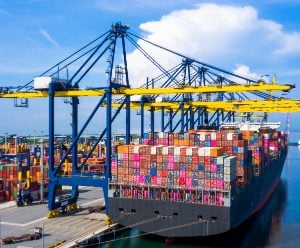
The latest market update estimates that 3.9 million TEU, equivalent to 12 percent of effective vessel capacity, is tied up in port congestion. While the percentage impact is lower than in 2022, the absolute volume affected is similar.
The unpredictable weather continues to play a role. Multiple typhoons disrupted Chinese ports during July and August, with only 21 percent of vessels arriving in Shanghai on time in July. In Europe, low Rhine water levels reduced inland waterway connectivity and further strained logistics networks.
The report also points to a structural challenge: ports, terminals, rail services, barges, and trucking networks take far longer to expand than vessel fleets. Additional ships do not automatically create additional logistics capacity.
The critical question is not whether a vessel is sailing. It is whether the supporting infrastructure can move cargo efficiently once it reaches port. Congestion is reducing effective capacity even as fleet capacity grows.
Air freight capacity is following demand
Global air cargo demand grew 5 percent year-on-year and year-to-date in July 2026. However, the market is moving in different directions by region. Asia-North America demand increased 20 percent year-on-year, while Asia-Europe demand declined seven percent.
The divergence reflects changing demand patterns. AI infrastructure, semiconductors, electronics, and advanced manufacturing shipments are supporting Transpacific growth. At the same time, EU import-rule changes introduced in July 2026 have softened Asia-Europe e-commerce flows.
Capacity has responded accordingly. Global air cargo capacity remained broadly flat, but freighter capacity shifted from Europe toward Transpacific markets. Asia-U.S. load factors approached 90 percent, while China-Europe freighter capacity declined significantly from June.
Growth has been especially strong from Vietnam, Thailand, India, Korea, and Taiwan, reflecting broader manufacturing diversification across Asia.
“Shippers moving cargo from Southeast Asia and India should expect tighter planning windows and less booking flexibility where carrier allocation controls remain in place. Advance booking remains advisable for larger shipments,” said Fabio Weiss, Senior Vice President, Air Freight, DHL Global Forwarding Asia Pacific.
The Suez Canal has returned to the chat group
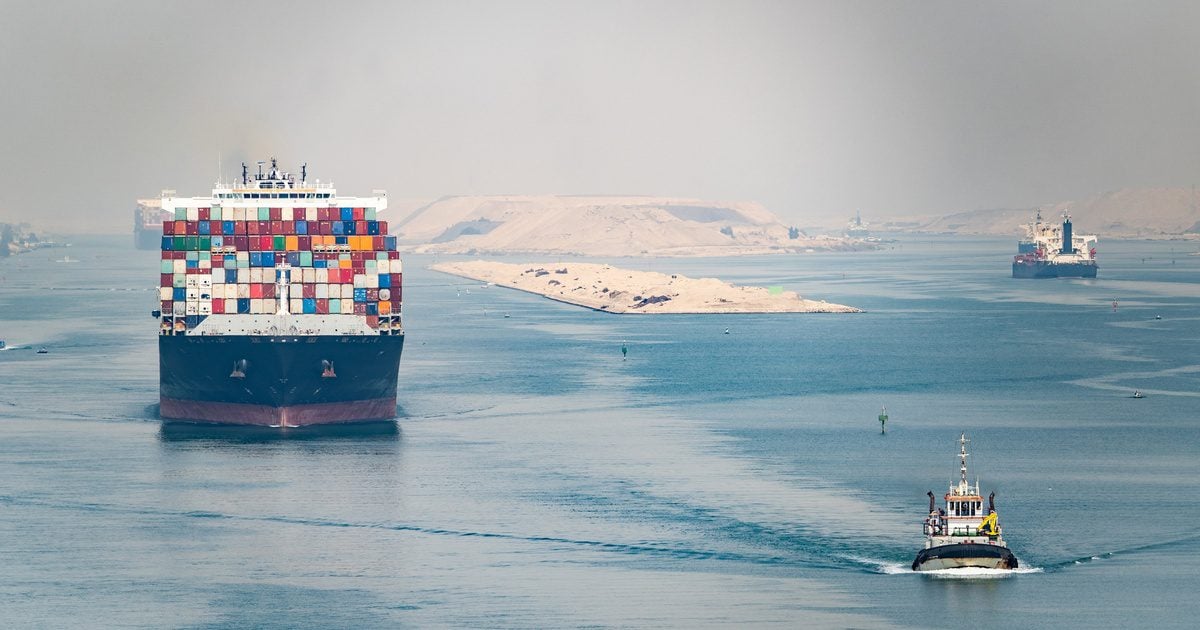
About 18 percent of relevant East-West services are now planned through the Suez Canal, up from around three percent earlier in the year. Higher fuel costs, improving security perceptions, and longer Cape routings are encouraging some carriers to return. Insurance and security considerations, however, continue to limit wider adoption.
A broader return could improve vessel utilization, speed up equipment circulation, and shorten transit times. However, the transition may also create temporary congestion and equipment imbalances as schedules adjust. Normalization is expected to take six to twelve months, ideally without further disruption.
Ultimately, the Suez Canal return is more of an emerging opportunity rather than a fixed planning assumption. Routing flexibility and contingency planning remain essential.
More capacity does not equate to lower rates
While vessel capacity growth is expected to exceed nominal trade growth in the coming years, trade-specific demand peaks, headhaul-backhaul divergence, congestion, weather disruption, and geopolitical uncertainty continue to constrain how effectively that capacity can be deployed.
Air freight faces a similar reality. Overall capacity may be stable, but Asia-North America markets are expected to remain relatively tight as technology-related demand continues to absorb available space.
Capacity may become more flexible, yet rates can remain elevated if additional space appears on the wrong trade lane while congestion and infrastructure constraints persist.

The crystal ball for the final quarter
As Q4 approaches, the focus should shift from headline capacity figures to the factors that determine whether cargo can move as planned.
Trade-lane-specific capacity deployment will remain critical, particularly as carriers continue to balance demand across different markets. Headhaul and backhaul imbalances are also likely to influence equipment availability and space allocation, while port congestion and inland infrastructure performance will continue to shape reliability beyond the vessel or aircraft itself.
In air freight, close attention to capacity allocation across Asia–North America markets remains essential as technology-related shipments continue to compete for available space. On the ocean side, the pace of Suez Canal reintroduction will be an important signal of whether network efficiency can improve in the months ahead.
Fuel prices across both air and ocean freight will remain a key variable, with the potential to influence operating costs, surcharges, and routing decisions.
“The defining freight story is increasingly not whether capacity exists, but whether it is available where shippers need it, when they need it, and under conditions they can reliably plan around,” noted Frank. “Understanding that shift may prove more valuable than any headline capacity figure.”




 English