



The peak season that broke the freight calendar

Key takeaways
- Peak season is not ending as demand remains resilient across key trade lanes.
- Port congestion and disruption are reducing available ocean freight capacity despite fleet growth.
- Air freight demand is shifting from moderating e-commerce growth to semiconductors, AI-related products, advanced manufacturing, and data center infrastructure.
The traditional peak season had a familiar pattern. Demand rises, networks tighten, rates climb, and eventually the pressure eases as additional capacity enters the market and cargo volumes moderate.
None of that has manifested with the early freight peak in 2026, which is likely to stay through the summer.
“For shippers, the second half of 2026 may be less about waiting for normality to return and more about adapting to a market where pressure has become the norm,” said Niki Frank, CEO, DHL Global Forwarding Asia Pacific.
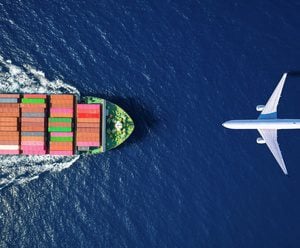
Across both ocean and air freight, demand continues to outpace available capacity, keeping rates elevated and space constrained despite the arrival of new vessels and aircraft.
While the drivers differ by mode, the message from both markets is strikingly similar: supply chains remain under pressure, and shippers should prepare for challenging conditions to persist in the months ahead.
A demanding market
Freight networks entered the second half of the year with considerable momentum, with Asia remaining at the center of this demand story.
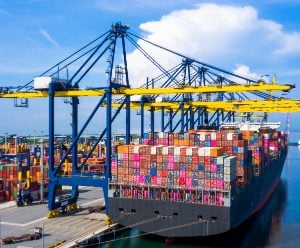
In ocean freight, container demand has expanded on the back of strong exports from Asia, and holiday inventory replenishment. Growing volumes linked to manufacturing output, technology exports, solar components, battery storage systems, and electric vehicle-related cargo are all contributing to freight flows across key trade lanes.
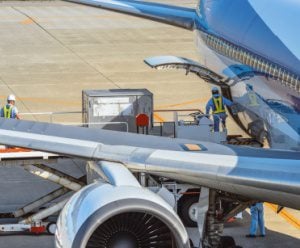
Air cargo is experiencing a similarly strong year. Global air freight volumes rose 9 percent year over year in June and are up 5 percent year to date, supported by Asia manufacturing activity and continued demand for semiconductors, AI-related products, data center infrastructure, and other high-value technology shipments.
What is noteworthy is that strong demand across both modes has persisted against a backdrop of geopolitical uncertainty, shifting trade policies, and ongoing disruptions to global transportation networks.
As a result, capacity remains under pressure even as carriers continue bringing new assets into service.
Figuring out the capacity puzzle
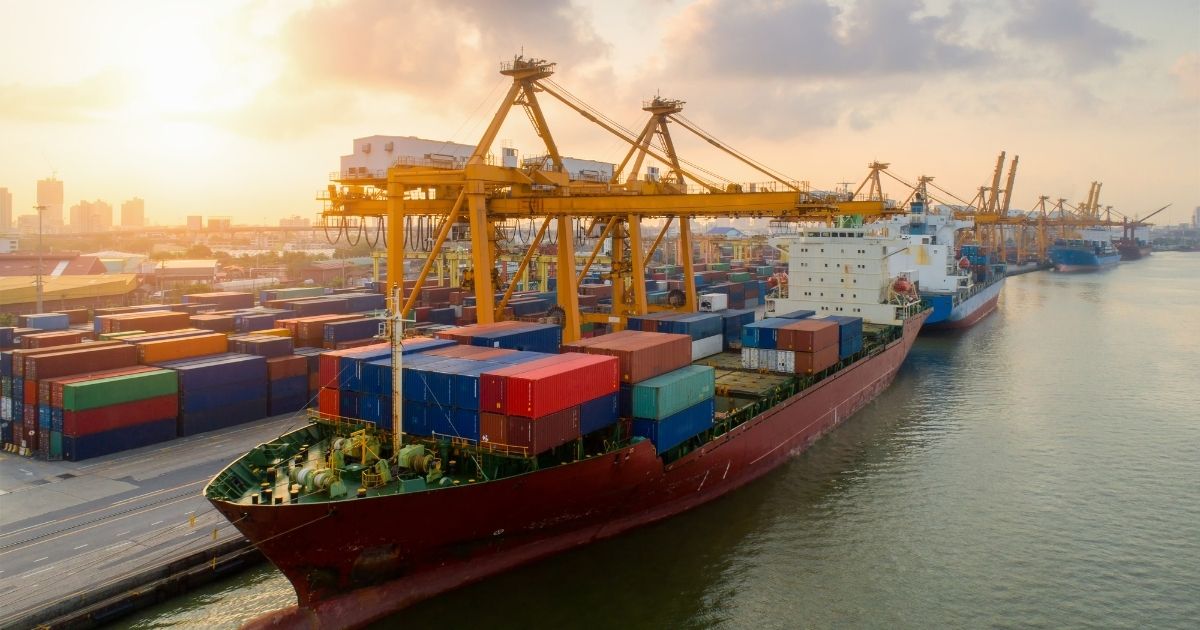
At first glance, the ocean freight market should be loosening, as the global container fleet is expanding. Yet many shippers are discovering that more assets on paper do not necessarily translate into more space in practice.
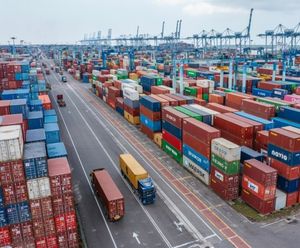
More than 3.7 million TEU are currently tied up in congested ports globally, bringing congestion levels back to the post-pandemic disruptions of 2022. Typhoons disrupting operations at several Chinese ports and strong export demand creating bottlenecks across Asia have made the congestion effect heavily felt in North Asia.
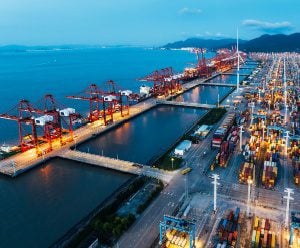
DHL’s monthly Ocean Freight Market Update noted that congestion continues to remove effective supply from the market and that vessel slot availability remains under pressure even as fleet capacity expands. Its congestion monitoring similarly shows significant volumes tied up at anchorages across major gateways including Shanghai, Ningbo, Shenzhen, Singapore, Antwerp, Rotterdam, and Busan.
A new air freight dynamic
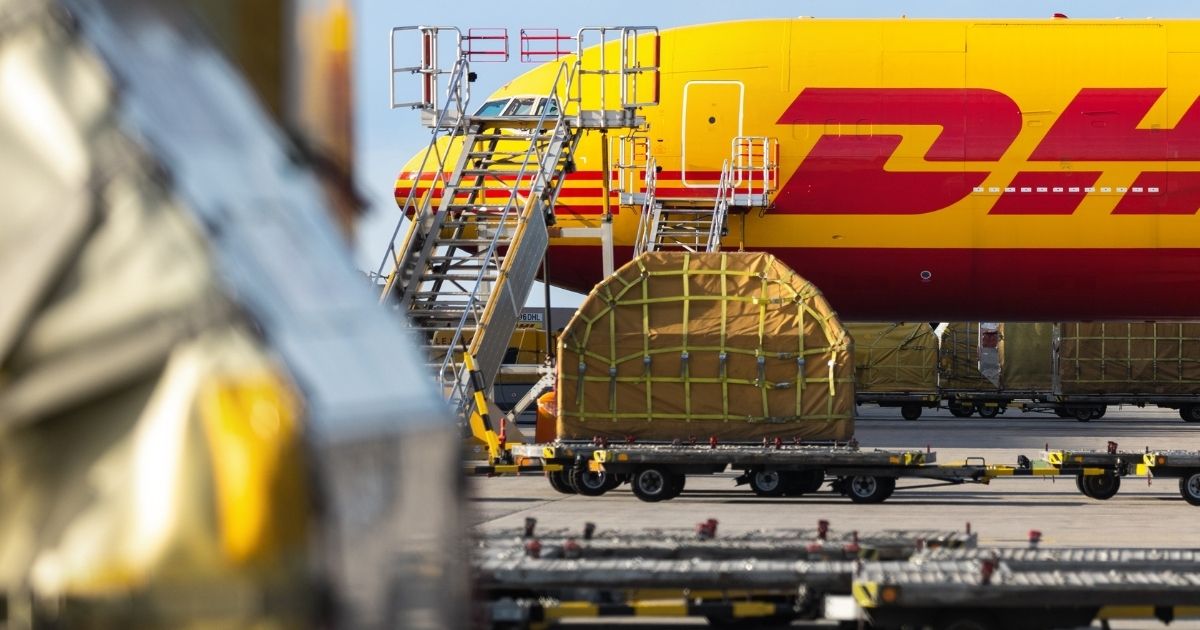
While ocean freight continues to grapple with congestion and routing challenges, air cargo is being shaped by a changing mix of demand.
For much of the past several years, cross-border e-commerce has been one of the industry's most important sectors. That dynamic is beginning to evolve. Regulatory changes, including new EU de minimis measures, are contributing to slower growth in e-commerce shipments from China.
Yet demand has not disappeared. Instead, it is shifting.
Industrial goods, manufacturing inputs, semiconductors, AI-related products, and advanced technology equipment are increasingly driving air cargo volumes. Investment in data centers, digital infrastructure, electrification, and advanced manufacturing continues to generate demand for high-value, time-sensitive shipments that are well suited to air freight.
“This reflects a broader change occurring across global supply chains,” said Fabio Weiss, Senior Vice President, Air Freight, DHL Global Forwarding Asia Pacific. “As governments and businesses invest heavily in AI infrastructure and advanced manufacturing capabilities, the movement of critical components is becoming a larger contributor to air cargo demand.”
For shippers moving high-value goods, the changing cargo mix may create opportunities to access capacity that was previously dominated by e-commerce flows. At the same time, strong demand from semiconductor, technology, and AI-related sectors means competition for premium services is likely to remain intense.
Why reliability may matter more than rates
Strong demand and limited capacity have often led freight markets to focus on the most visible metric: rates.
The Shanghai Containerized Freight Index (SCFI) notes that ocean freight rates in July have risen by 107 percent year-on-year. A myriad of reasons are contributing to the elevated levels, such as carriers initiating blank sailing and restricting contract space.
Despite the elevated rates, there has been a gradual stabilization in the level as carriers shift capacity to higher demand lanes. The same narrative shows air freight rates in June seeing a 33 percent year-on-year increase, but the numbers remaining broadly similar from May.
Rates, however, are just one part of the equation. Freight decisions increasingly need to consider a myriad of factors such as schedule reliability, capacity access or alternative routing options when disruption occurs.
Shippers must change the conversation from "What is the lowest-cost option?" to "Which option gives me the highest probability of arriving on time?" in today’s context.
“The ongoing challenge to solve is whether cargo can move when it is needed,” said Bjoern Schoon, Senior Vice President, Ocean Freight, DHL Global Forwarding Asia Pacific. “That is why reliability is becoming more than a service metric. It is becoming a supply chain planning tool.”
The summer of volatility
The freight market is sending a clear signal: the pressures that created the early freight peak season are here to stay.
Ocean freight continues to contend with congestion, rerouting, and elevated rates. Air freight remains supported by strong demand for technology and industrial goods. Across both modes, demand is proving remarkably resilient while effective capacity remains constrained.
Disruptions across the Middle East remain a major source of uncertainty for ocean shipping. Security concerns in the Red Sea and uncertainty surrounding key maritime chokepoints continue to influence vessel routing decisions, transit times, service reliability, and operating costs.
Fuel markets also remain a wild card. In ocean freight, elevated bunker prices continue to increase operating costs as carriers navigate longer sailing routes and geopolitical disruption. Jet fuel prices rose sharply in July, underscoring how quickly energy market volatility can affect air cargo rates and network capacity decisions.

The right place at the right time
Several themes will likely define freight markets through the remainder of 2026.
Asian exports remain a key source of demand growth, particularly in technology, semiconductors, AI-related equipment, renewable energy, and electric vehicle supply chains.
For many shippers, the challenge is no longer simply securing space at the right price, but ensuring shipments arrive when they are needed.
At the same time, reliability is becoming as important as price, with a growing need to strike a balance between both.
“In a market where disruption, tight capacity, and shifting demand patterns are becoming the new normal, businesses should remain mindful of how resilient and reliable their supply chain needs to be,” noted Frank.




 English