



Building supply chain resilience: from Just-in-Time (JIT) to Just-in-Case (JIC)

“Leaner is better”. This has been the oft-repeated mantra of the global logistics industry for decades. And from this philosophy, Just-in-Time (JIT) manufacturing emerged, championing the movement to eliminate waste by producing only what is needed.
But was this really better? Now, in 2026, we see a fundamental shift in the supply chain narrative. Looking back at the disruptions of the early 2020s—from the COVID-19 pandemic to geopolitical frictions—it has become clear that the unpredictable stability of global supply chains necessitates having more than just enough in the tank to keep moving despite unexpected pit stops and detours.
And so we come back once again to Just-in-Case (JIC). This return to basics represents a strategic realignment of the global supply chain, where continuity and longevity are now favored over a single-minded drive to cut costs.
Redefining resilience in supply chain management
To understand this shift, we must first address a core question: What is supply chain resilience?
Previously, supply chain resilience was simply about being robust, or having the ability to withstand disruptions without breaking. This perspective was rather static and immutable, but has evolved to embrace a more dynamic view. The modern supply chain must now have the capacity to prepare for unexpected events, respond to disruptions, and recover quickly to ensure operational continuity.
Where JIT was all about speed, JIC-focused supply chain resilience prioritizes survival. In effect, supply chains must be equipped to absorb shocks—such as a raw material shortage or a sudden border closure—and not fail because production must halt.
In this regard, the efficiency of a supply chain cannot solely be measured by throughput speed. Output reliability must also receive significant consideration.
Finding the intersection between JIT and JIC
It is this factor of output reliability that sets JIT apart from JIC. At the heart of JIT is the assumption that the global supply chain ecosystem is stable. It leveraged predictable, frictionless borders to operate supply chains efficiently and cost-effectively. However, once these variables were disrupted, JIT supply chains shattered, leaving manufacturers hanging as their carefully planned shipments stalled with no resolution in sight.
JIC overturns JIT’s Achilles heel through the acceptance of higher holding costs as an insurance premium against disaster. But reverting to JIC does not mean a return to the wasteful, bloated warehouses of the 1970s. Instead, modern JIC strikes a strategic balance between flexibility and redundancy, enabling the agility to respond to immediate changes while also maintaining a sensible backstock.

Modern JIC decouples the immediate availability of materials from the immediate flow of transport. In JIC, when the supply flow stops coming in, the stock keeps things moving out. This continuity protects market share, brand reputation, and customer trust—assets far more valuable than the cost of warehousing a few extra pallets of inventory.
In this regard, the JIT-to-JIC pivot has altered the perspective of inventory being wasteful dead stock, and it is now treated as an essential buffer against supply chain shocks. When a supplier goes offline or a shipping route is blocked, so-called surplus stock is swiftly delivered to the intended recipient, effectively ensuring orders are fulfilled with minimal or no disruption.
Sophisticated asset tracking further strengthens the inventory’s position as an asset that acts as a safety net while resources are deployed to locate alternative suppliers, reroute shipments, and reconfigure production lines.
Building the Internet of Things into the JIC model
Aside from asset trackers, other Internet of Things (IoT) innovations are helping to rewrite JIC's narrative from one of hoarding to one of smart buffering.
Instead of predicting static safety stock levels based solely on historical sales data, smart warehousing systems perform predictive risk modeling to dynamically adjust stock levels. A warehouse equipped with smartified IoT sensors can track the location of goods with pinpoint accuracy and weave real-time external risk factors into their inventory assessments.
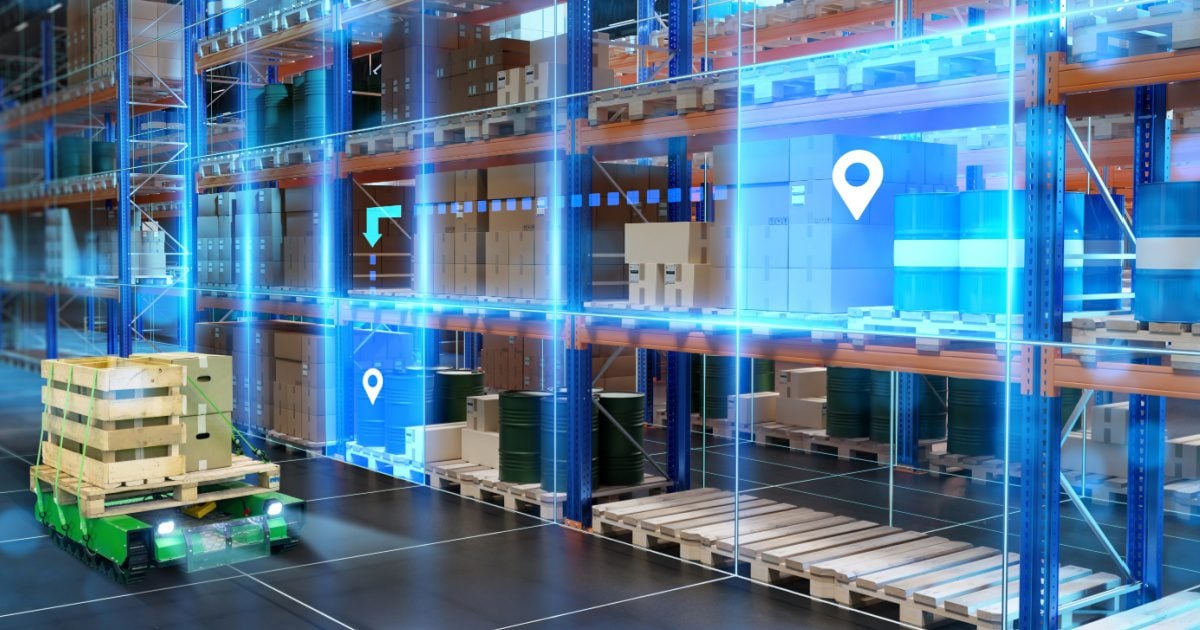
Consider the scenario of a supply chain’s digital twin projecting a typhoon that would impact a key shipping route in the Pacific. Without the need for human intervention, demand sensing carried out by the system—that could include the use of smart containers equipped with IoT sensors, GPS and RFID tags—would automatically respond to this projection by triggering an increase in safety stock orders for affected components before the disruption hits.
Resilience can also be further strengthened through capacity hedging of transport allocations ahead of the projected disruption to ensure that deliveries still get made. However, the trade-offs are real. Even as JIC is praised for shoring up supply chain resilience, it inevitably requires more working capital to maintain inventory. It also demands more warehousing space and advanced management systems to prevent stock from expiring or becoming obsolete.
The challenge for logistics leaders, then, is to minimize such costs with technology, ensuring that Just-in-Case doesn't become Just-in-Waste.
Resilience and sustainability go hand in hand
As JIC regains prominence to build supply chain resilience, care must also be taken to minimize negative environmental impacts. Holding more stock and potentially using faster, more energy-intensive shipping modes during crises can increase emissions.
This is where the synergy between resilience and sustainability becomes critical. To counterbalance the carbon impact of a robust JIC strategy, companies are increasingly turning to sustainable logistics solutions.
Services like DHL Express GoGreen Plus enable businesses to reduce carbon emissions associated with their shipments via Sustainable Aviation Fuel (SAF). By insetting carbon reductions within the supply chain, businesses can maintain the high inventory levels required for resilience without compromising their net-zero goals.
In 2026 and beyond, a resilient yet efficient supply chain is one that achieves high order fulfilment without compromising on sustainability. This reality is made possible by using IoT to make safety stock smart and by embracing green logistics to keep resilience sustainable.

ALSO WORTH READING









 English