



Retaining customers with effective returns management

Key takeaways
- Returns are a critical customer experience touchpoint. A seamless returns process builds trust and loyalty, with most consumers likely to repurchase when returns are easy and hassle-free.
- Automation and visibility drive efficient returns management. Self-service portals, intelligent routing, and data tracking accelerate processing, reduce costs, and improve inventory turnaround in reverse logistics.
- Returns data and strategy can boost profitability and sustainability. Analyzing return reasons, optimizing policies, and adopting greener practices help reduce waste, recover value, and convert returns into future sales opportunities.
Online shopping in the early days ended at the "Buy Now" button. Now, that is often just the midpoint. As the e-commerce industry matures, the shopping journey can also, on occasion, seem to go into reverse when the product makes its way back to the seller from the consumer, making the returns process a critical part of the shopping experience.
In fact, according to the National Retail Federation, an average of 18 percent of all online orders today are sent back. Fortunately, while a return may seem like a lost sale, it is actually a critical touchpoint for businesses to build long-term trust with their customers, and it has a significant effect. Research from Route in 2026 shows that nearly 92 percent of consumers will buy again if the return process is easy.
Turn a “bye” into a future “buy” with a returns management system
An efficient returns management system is a core component of reverse logistics and should be an essential part of a seller’s business operations.
Returns management is the process of moving stock from the buyer back to the seller’s inventory shelves as quickly as possible—all while ensuring a seamless consumer experience throughout the returns process.
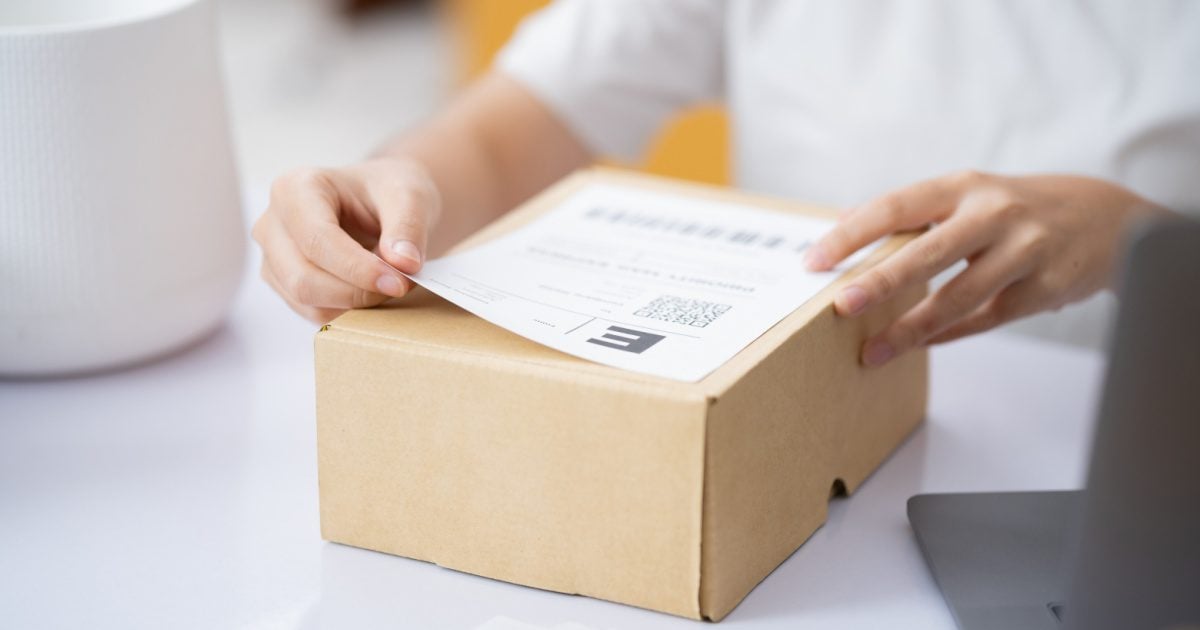
A self-service returns management system portal removes the need for manual emails. Customers log into a portal, select their reason for return (such as "Defective" or "Wrong Size"), and immediately receive a prepaid shipping label or QR code to affix to their package to be returned.
Once the item is in transit, the portal uses intelligent routing to send the package to the best location, whether that is a local refurbishment center, central warehouse, or third-party liquidator.
The greatest benefits of a returns management system portal? Not only does it reduce manual data entry and minimize human error, but businesses also get data on why customers are returning the goods even before the returned items arrive back in the sellers’ hands.

Mastering the returns management system
The key components of a successful returns management strategy involve visibility and automation.
1. Pre-define the return route
With a returns management system portal, a digital log allows the warehouse manager to staff the floor based on incoming data. Items are sent directly to the location where they will be processed most quickly, reducing unnecessary transit time and fuel costs.
For example, refurbishment lane technicians can be scheduled accordingly, taking into account the digital log, to be on-site and ready to handle goods tagged as defective. This allows for efficient testing or disposal and prevents clogging of standard restocking lines.
Meanwhile, items flagged as "Wrong Size" (usually clothing) bypass inspection and are routed back for immediate steam-pressing, rebagging, and restocking. This reduces dock-to-stock time and the item can be scanned in, refreshed, and listed back as "Available" on the business’s website within hours.
2. Analyze the data
It is also crucial to treat every return as valuable feedback that may signal a larger issue. Businesses can identify repeated problems with specific products, such as sizing inconsistencies or quality defects, and address them at the source.
For example, if many returns are flagged as "color not as pictured" within a short time frame, it may point to an issue with the product’s advertised images. Or, if a specific clothing item has a high return rate because it runs small, businesses can nip the problem in the bud by adjusting the item’s product description to advise potential customers to size up when making their order.
3. Consolidate the return
Returns are expensive because they are usually shipped individually rather than in bulk.
As e-commerce returns continue to swell—reaching US$849.9 billion (€736.61 billion) in 2025—a strong international logistics network is needed to handle the reverse half of the equation. Consider working with a trusted logistics partner to use local or regional drop-off points, such as lockers or retail shops.
By leveraging an end-to-end global network, retailers can offer their customers a variety of convenient drop-off options, from parcel lockers to local retail partners. This reduces transit time and simplifies the customs and compliance hurdles that often make international returns a nightmare.
Many happy returns: five best practices for returns management
Want to move beyond basic returns processing? Consider adopting these six industry best practices.
1. Set a price threshold
Reverse logistics is expensive. After factoring in shipping, warehouse labour, and re-packaging, returning a low-value item often results in a net loss. In situations like this, it will be cheaper to process a refund and let the customer keep the item, rather than initiate a costly return process.
Consider setting a price threshold in the returns management system portal. When a customer requests a return for an item below the threshold, the system automatically triggers a refund and informs the customer to keep the product.
This way, companies eliminate the shipping cost, free up warehouse space for higher-margin goods, and create massive customer goodwill.
2. Build a behavioral profile for each customer
By tracking return history, a returns management system portal identifies patterns in how individuals shop and return. This flags out serial returners—shoppers who frequently claim an item is defective when the warehouse finds it in perfect condition. Usually, this is a tactic to bypass return shipping fees or restocking costs.
For high-risk accounts who often abuse the system or return a high percentage of their total purchases, companies can dynamically disable free returns or instant refunds. These users might be required to pay for their own return shipping or wait for a full warehouse inspection of the returned items before their refund is processed.
3. Use logic-based prompts
Besides setting price thresholds and building behavioral profiles, companies can also consider using logic-based prompts to nudge buyers away from a full refund.
When a customer initiates a return, the system can use "If/Then" rules to change the outcome by attempting to steer the customer away from a total refund.
If a customer initiates a return with the reason “Too Small", the system checks the live inventory. If a larger size is in stock, the system prompts the customer: "Want a Medium instead? We'll ship it for free today." Alternatively, if the reason is "Didn't like the look", the system can offer a bonus credit if the customer chooses to receive store credit instead of getting a refund to their original payment method.
Through this, businesses can convert a potential lost sale into a completed exchange. In some cases, a partial refund to keep a slightly flawed item is cheaper and greener than processing two-way shipping for a replacement item.
4. Accelerate the return window
The longer a returned item sits in a customer's house, the less likely it is to be in season or in style when it finally returns to the shelf. Use a tiered incentive to speed up the process, such as offering a five percent discount code or loyalty points if the return is scanned by the carrier within seven days of the delivery date.
Getting an item back in one week instead of a month allows companies to resell it at full price before the next seasonal markdown. It also means less overproduction, as businesses can fulfill new orders with existing returned items rather than manufacturing new units.
5. Green the returns process
While a smooth return process is great for the customer, it carries a heavy environmental price tag. In the United States alone, returns generate approximately 15 million metric tons of carbon emissions annually. Worse still, many returned items end up in landfills because the cost of re-kitting them for resale exceeds their value.
This has inspired a shift toward sustainable reverse logistics. Forward-thinking brands are now opting for:
- Paperless returns: using QR codes at drop-off points to eliminate the printing of shipping labels.
- Circular consolidation: grouping returns at local hubs to reduce the number of individual last-mile trips back to the warehouse.
- Repair and resell: partnering with secondary markets to ensure products get a second life rather than a one-way trip to the bin.
Turning the tide on returns

In a booming e-commerce market that is expected to reach US$6.88 trillion (€5.96 trillion) by the end of 2026, the challenge of returns management is here to stay. But it does not have to be a washout.
By treating the return journey with the same level of care and innovation as the initial delivery, businesses can build deeper trust with their customers and foster a sustainable, circular relationship between the brand, the buyer, and our planet.
ALSO WORTH READING







 English