



From visibility to foresight: the technology bolstering supply chain resilience

Key takeaways
- Supply chain resilience is critical in a volatile world. Disruptions from geopolitics, extreme weather, pandemics, and shifting demand have made resilience essential to maintaining continuity in global supply chains.
- Digital technologies enable proactive resilience. AI, IoT sensors, analytics, and digital twins provide real-time visibility and predictive insights, allowing companies to identify risks early and respond faster.
- Diversification alone is insufficient. Supplier and transport diversification must be combined with digital intelligence to manage complexity, simulate disruptions, and ensure faster recovery across global logistics networks.
In recent years, supply chains have faced disruptions from geopolitical tensions, extreme weather, the Covid-19 pandemic, and shifting demand patterns. These challenges have highlighted the importance of supply chain resilience.
Supply chain resilience has traditionally relied on strategies such as diversified suppliers or flexible transport routes, and now digital technologies play an increasingly critical role. Artificial intelligence (AI), Internet of Things (IoT) sensors, and advanced analytics are enabling companies to detect risks earlier and make faster and better-informed decisions.
Together, these technologies provide the visibility and foresight needed to keep goods moving, even in times of extreme uncertainty.
What is supply chain resilience?
Supply chain resilience refers to a supply network's capacity to withstand disruptions while maintaining the flow of goods and services. A resilient supply chain can identify risks early, adjust operations when disruptions occur, and recover quickly without major interruptions.
In today’s global economy, supply chains often stretch across multiple countries and suppliers. This complexity increases exposure to risks such as transportation delays, supplier shortages, or sudden shifts in demand.
One approach to strengthening resilience is diversification. DHL’s 2024 Trend Report on Supply Chain Diversification notes how companies can reduce risk by expanding supplier networks, using multiple transport modes, and building flexible logistics operations. These strategies help create supply chains that can adapt to disruptions.
However, a resilience strategy that relies on diversification alone can fall short. Organizations also need real-time visibility and predictive insights to manage increasingly complex logistics networks.
How to measure resilience in supply chains
Supply chain resilience is often assessed through a combination of operational indicators and strategic design factors. Common measures include:
- Visibility across the supply network, including shipment tracking and inventory monitoring
- Speed of response to disruptions, such as rerouting shipments or adjusting inventory levels
- Supplier and logistics diversification, which reduces reliance on a single source
- Recovery time after disruptions, which indicates how quickly operations return to normal
Technology plays an essential role in improving these metrics. Digital tools allow companies to monitor operations continuously and identify potential issues before they escalate into larger disruptions.
This shift from reactive problem solving to proactive risk management is one of the defining characteristics of modern resilient supply chains.
The role of advanced technologies in supply chain resilience

Traditional supply chains often relied on manual updates or delayed reporting, making it difficult to identify problems until they had already affected operations. Today, connected systems can detect anomalies as they happen.
By combining data from multiple sources, companies can gain a clearer view of operations across warehouses, transportation routes, and supplier networks. Several emerging technologies play a key role.
Artificial intelligence and predictive analytics
AI-powered analytics can process large volumes of logistics data to identify patterns and forecast potential disruptions. Predictive models can analyze historical shipping delays, weather data, and demand fluctuations to identify risks before they affect operations.
These insights allow logistics teams to adjust routes, allocate inventory more efficiently, or prepare contingency plans.
Logistics providers are increasingly applying AI to operational planning. DHL, for instance, uses data-driven analytics to improve network visibility and identify potential bottlenecks across transport routes and logistics hubs. By analyzing operational data in real time, logistics teams can make faster decisions when disruptions occur.
Digital twins
Digital twins create virtual replicas of supply chain networks. By simulating different scenarios in the digital twin network, companies can carry out resilience stress testing to see how logistics operations can respond to a range of disruption scenarios such as port closures or supplier shortages.
This approach helps decision-makers evaluate mitigation strategies and identify vulnerabilities before problems arise in real-world operations. Digital modeling tools are increasingly used to simulate transportation flows, warehouse capacity, and routing strategies, helping logistics planners identify more resilient supply chain configurations.
Internet of Things sensors
IoT sensors provide real-time data on shipments and infrastructure. Sensors placed in containers or vehicles can monitor factors such as location, temperature, humidity, and vibration.
This visibility is especially important for industries that transport sensitive goods such as pharmaceuticals, electronics, or fresh food, as it enables companies to perform predictive maintenance to minimize equipment failures. If a temperature deviation occurs, logistics teams can intervene quickly to prevent product damage.
DHL has integrated IoT-enabled monitoring into several logistics solutions, particularly for temperature-controlled supply chains. These sensors provide continuous shipment visibility and alert teams if environmental conditions move outside acceptable ranges.
Global logistics powered by digital technologies
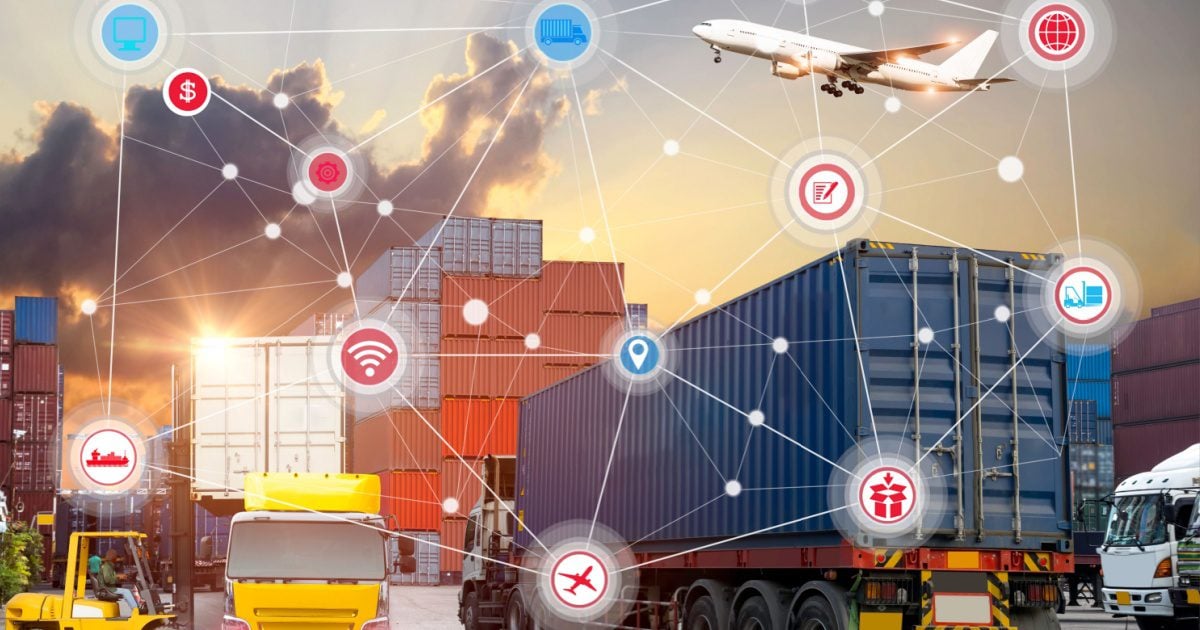
Logistics providers such as DHL are integrating AI-enabled route planning to analyze traffic patterns, weather conditions, and shipment priorities in real time. By continuously adjusting routes based on current information, delays are reduced and consistent service levels are maintained.
Predictive maintenance technologies are also being utilized in logistics facilities and transport fleets. Sensors installed on warehouse equipment and transport infrastructure monitor performance indicators and detect early signs of mechanical wear. Maintenance teams can address potential issues before they lead to equipment failures that disrupt operations.
In large distribution centers, smart warehouse technologies are improving operational resilience. Data platforms connect warehouse management systems, sensors, and transport networks, allowing logistics teams to monitor inventory movement and equipment performance across facilities.
Digital platforms also enable logistics partners and customers to access shared data, improving coordination across supply networks and helping businesses respond quickly to disruptions.
These capabilities demonstrate how technology supports supply chain resilience by combining visibility, predictive insight, and operational flexibility.
Building resilience for the future
As global supply chains continue to grow more complex, resilience will remain a top priority for businesses. Organizations must prepare for disruptions ranging from extreme weather events to geopolitical changes and shifting consumer demand.
Technology alone cannot eliminate risk, but it can significantly improve how supply chains detect and respond to challenges.
By combining advanced digital tools with strategic network design and diversified logistics operations, companies can build supply chains that are more adaptable and better prepared for uncertainty.
In this environment, technologies such as AI, IoT sensors, and digital twins are becoming essential components of modern logistics. They provide the real-time intelligence needed to anticipate disruptions, protect shipments, and keep goods moving across global markets.
With its global logistics network, advanced digital capabilities, and continued investment in innovation, DHL is helping businesses across Asia Pacific build more resilient supply chains—ensuring goods continue to move even in times of uncertainty.
ALSO WORTH READING







 English