



Mind the (talent) gap in healthcare supply chains

Behind the essential industries of biopharma, cold chain shipping, and clinical trials, one thing has become absolutely certain: there is a talent gap.
The life sciences and healthcare sector has seen the workforce behind it spread thinner than butter scraped over too much bread.
With a global talent shortage threatening healthcare logistics, upskilling, automation, and innovation are bridging the talent gap as the healthcare sector experiences exponential growth.

Much ado about shortages
The infamous Covid-19 pandemic accelerated retirements and exposed cracks in the labor pool, making many frontline roles, including those in the logistics industry, far less appealing.
In the life sciences sector, the onus is even higher on its logistics professionals, who must be familiar with Good Distribution Practice. This is on top of navigating customs regulations and handling protocols for temperature and time-sensitive shipments. The high level of specialization required creates barriers to entry faster than a dragon amasses its hoard. Without employer-led upskilling, the industry may well remain impermeable.
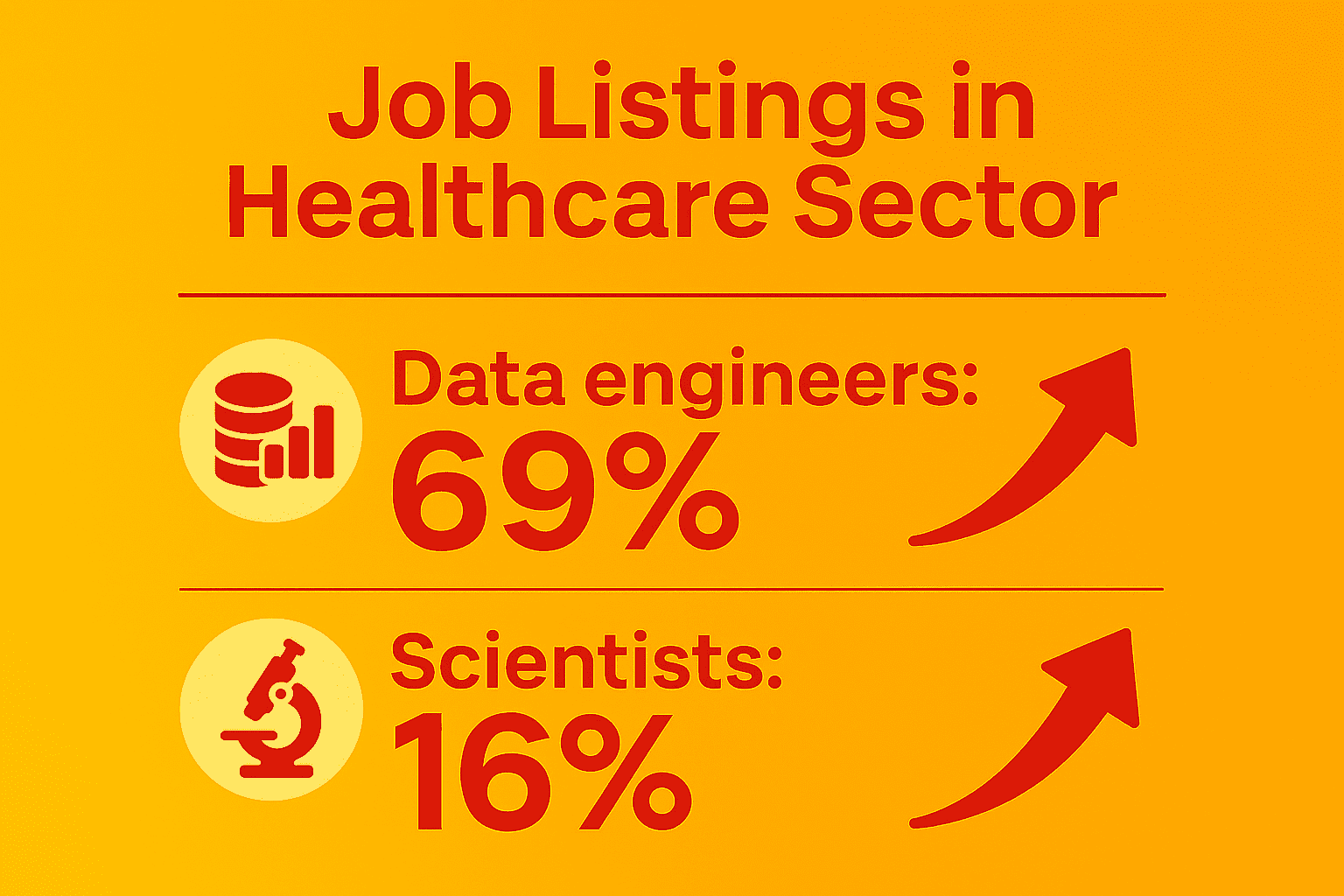
According to Deloitte, job listings for data engineers and scientists in life sciences have jumped by 69 and 16 percent respectively since 2019. This is in line with how 83 percent of supply chain leaders report that re-skilling is critical to support digital transformation. The demand is not just for quantity, but for quality workers equipped with the knowledge and skill sets to master aspects of the industry such as integrated digital platforms, compliance standards, and next-generation cold chain tools.
This is on top of how the World Health Organization warns of a 11 million healthcare worker shortfall by 2030. This ominous deficit is being driven by a perfect storm of aging populations, rapid digitization, and intensifying service expectations. While most attention is placed on doctors and nurses, many forget the equally critical infrastructure workers, on whose existence delivery systems depend on to exist. From temperature-controlled storage operators to last-mile compliance coordinators, these behind-the-scenes contributors are quietly diminishing.
In the same vein, DHL reports that the supply chain faces a ‘war for talent’, wherein demand is outstripping supply by a ratio of nine to one. In 2024, vacancy rates for specialized roles such as cold chain specialists, quality assurance leads, and transportation analysts are a source of trouble for logistics providers. However, in the wake of the expanding industries of biologics, gene therapies, and mRNA-based treatments, demand for temperature-sensitive healthcare shipments is projected to reach a value of $27.74 billion by 2028 from $20.39 billion in 2022.
Great expectations, limited supply
But the problem is not just one of volume; it is also about the quality of fit. This is not surprising when one considers that the search is for specialized and rare talent that are more in demand than ever.
The life sciences and healthcare industry desires individuals with rare, cross-functional expertise in temperature-sensitive shipping, digital tracking systems, Good Distribution Practice compliance, and global customs fluency.
If that list sounds overwhelming, just know that bonus points also go to those who can deliver across time zones, during a crisis, and without dropping a vial.
The difficulty lies in finding candidates that fit all the requirements. Some might possess general operations experience but lack proficiency in compliance protocols. Others may understand logistics theory but have never executed a live shipment involving a -70 degrees Celsius payload.

The future belongs to hybrid professionals who blend specialized knowledge with adaptability, cold chain coordinators fluent in sub-zero logistics, compliance navigators versed in GDP, GxP, and international customs law, digital route architects who design transport flows using real-time data, resilience engineers who pivot entire operations in the face of pandemics or crises, and Internet-of-Things (IoT) integrators who keep sensor networks synced and secure.
Deloitte cautions that without successfully combining domain experience with digital fluency, organizations will face compounding operational risks in the immediate future.

The fellowship of the skill
Governments and trade bodies are investing in long-term workforce strategies. In Singapore, SkillsFuture and Workforce Singapore initiatives seek to upskill over its logistics professionals, through subsidising coursework, supporting mid-career switches, and financial incentives for employers who invest in employee development.

Initiatives such as degree programmes focused on digital supply chain management, work-study diplomas with industry partners, career conversion programmes for mid-career individuals, and industry-led efforts foster continuous learning and skills development.
From warehouse to whiteboard
Today, logistics providers look to hire beyond traditional pools, recruiting from adjacent industries such as accounting, offering valuable experience in system integration, real-time monitoring, and scenario-based planning, along with structured career tracks that help frontline workers transition into supervisory and leadership roles
The key to this evolution lies with automation in logistics, which can increase output exponentially. The enhanced workflow acts as complementary facets to human labor, rather than replacements. Robotics and artificial intelligence can do the job of relieving employees of repetitive tasks, allowing them to shift toward functions such as strategic planning, exception handling, and data interpretation. Such automated tools reduce human error, improve compliance, and enhance visibility across the network.
However, they do not erase the need for human labor. Someone must install, manage, and troubleshoot these systems. The human element must make decisions based on the data they generate. Automation, smart infrastructure, and digital platforms are crucial. But without talent, they are empty vessels. With appropriate training, today’s warehouse operator can become tomorrow’s digital logistics coordinator.
We might take a page out of Bilbo’s book and remember that sometimes, the greatest treasures are the ones we already hold. It is not enough to look forward; the path ahead begins with a look back to what has already come before, and how it must be brought along on the unexpected logistics journey of the life sciences and healthcare sector.

ALSO WORTH READING








 English