



How can India strengthen its supply chain resilience?

India’s growing role in global trade is opening up opportunities for manufacturers and exporters. But greater trade does not automatically translate into a more reliable flow of goods or inputs. A business can diversify its customer base and still depend on just a handful of component suppliers or a shipping corridor that is vulnerable to conflict.
Recent disruptions in the Strait of Hormuz and the Red Sea have shown how quickly shipping problems can affect Indian businesses. The disruption in the Strait of Hormuz put energy and natural gas supplies at risk. In the Red Sea, security concerns prompted shipping lines to reconsider usual routes between Asia and Europe.
Businesses need to map out their most essential suppliers and transport routes, and then establish alternatives before the next disruption.
How did the Strait of Hormuz disruption affect India?
The Strait of Hormuz is a major choke point for global energy trade and fertilizer shipments. It also matters to agriculture because natural gas and ammonia moving through the region are essential inputs for fertilizer production. Around one quarter of global seaborne oil trade and one third of global seaborne fertilizer trade pass through the strait, according to the United Nations Conference on Trade and Development.
During the March 2026 disruption, ship traffic through the strait fell from about 130 vessels a day in February to just six in March. Brent crude passed US$90 [€55.78] a barrel, and shipping, insurance, and marine fuel costs rose as well.
India was exposed because it relies on energy supplies from the Gulf. CRISIL Ratings estimates that 40–50 percent of the country’s crude oil imports and 50–60 percent of its liquefied natural gas imports normally pass through the Strait of Hormuz.
Liquefied petroleum gas (LPG) is a particular vulnerability. India imports around 60 percent of the LPG it consumes, with around 90 percent of these imports normally passing through Hormuz. As the Observer Research Foundation points out, India does not maintain large-scale strategic LPG reserves and depends on regular shipments to meet demand, leaving it vulnerable when supplies are disrupted for an extended period.
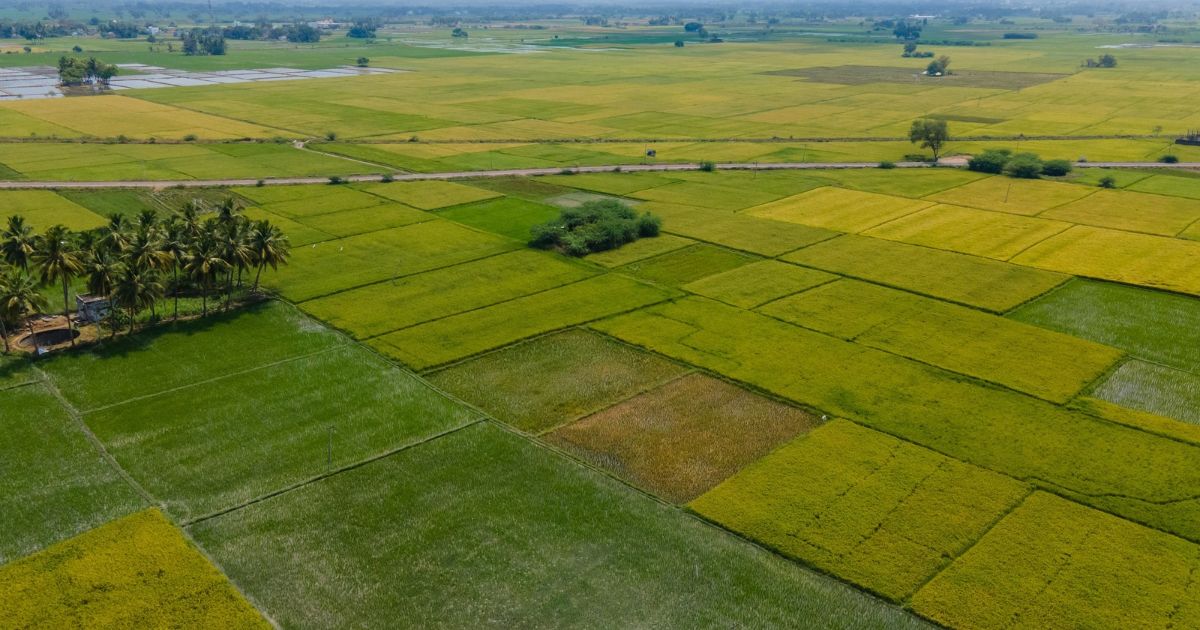
India is one of the world’s largest producers and consumers of urea, which farmers rely on to support crop yields and food production. Natural gas is a key input in urea manufacturing, so constraints on gas supplies can affect domestic output as well as the availability and cost of imported fertilizer.
A manufacturer does not have to buy from a Gulf supplier to feel the effects. Its suppliers might depend on fuel or raw materials shipped through Hormuz. If one of those inputs is hard to replace, a shortage can hold up production.
The Indian government took steps to limit the impact on exporters by creating an Inter-Ministerial Group for Supply Chain Resilience to monitor trade and coordinate measures, including assistance for stranded cargo. In March 2026, it also approved the RELIEF scheme to help eligible exporters dealing with higher freight and insurance costs.
What did the Red Sea crisis do to India–Europe shipping?
Disruption in the Red Sea and around the Bab el-Mandeb Strait made the Suez Canal route less reliable for shipping between Asia and Europe. Some carriers responded by diverting vessels around the Cape of Good Hope, which increased voyage times and fuel consumption.
Longer voyages meant later arrivals and missed connections. Importers risked running out of stock and exporters missed delivery windows for their customers.
Carriers responded by keeping goods moving, but the longer route added time and cost for Indian exporters. Businesses shipping to Europe had to account for longer transit times when planning deliveries and managing inventory.
Which Indian exports and industries are most exposed?
In ICRA Limited’s March 2026 assessment, several Indian industries were exposed to risks from the West Asia disruption.
- Basmati rice: West Asia accounts for around 70–75 percent of India’s basmati rice exports, worth US$5 billion to US$5.5 billion annually. Extended shipping delays can hold up consignments and put sales at risk.
- Gems and jewelry: West Asia is an important market for Indian jewelry and polished diamonds, as well as a source of imported diamonds and gold.
- Fertilizers and chemicals: Fertilizer and chemical manufacturers rely on imported gas and other raw materials, leaving them exposed to supply problems and higher input costs.
- Ceramics and other manufactured goods: Some producers face pressure from disrupted exports and higher energy or transport costs.
West Asia made up around 14 percent of India’s exports and 20–21 percent of its imports in fiscal year 2025, according to ICRA’s estimates. Although the region is important to Indian trade, an exporter’s exposure still depends on its own markets and supply arrangements.
What do logistics costs in India really look like?
India’s logistics costs were commonly put at 13–14 percent of GDP when the National Logistics Policy was launched in September 2022. A later estimate from the National Council of Applied Economic Research, published in 2025, put the figure at 7.97 percent of GDP for 2023–24.
As the two estimates use different methodologies, they do not show that logistics costs fell by a certain amount. While they may not tell businesses what it costs to move their own goods, they still help explain the national picture.
In addition to transport, logistics costs include warehousing, inventory holding, and customs administration. Disruption can add freight and insurance charges or tie up more working capital in goods held longer. But additional costs vary by product and route.
Is India a real alternative to China?
India is becoming an important manufacturing base, but China remains a major production and sourcing hub. Under the China+X strategy, companies add capacity in other countries instead of moving all their production out of China. The aim is to reduce reliance on a single country.
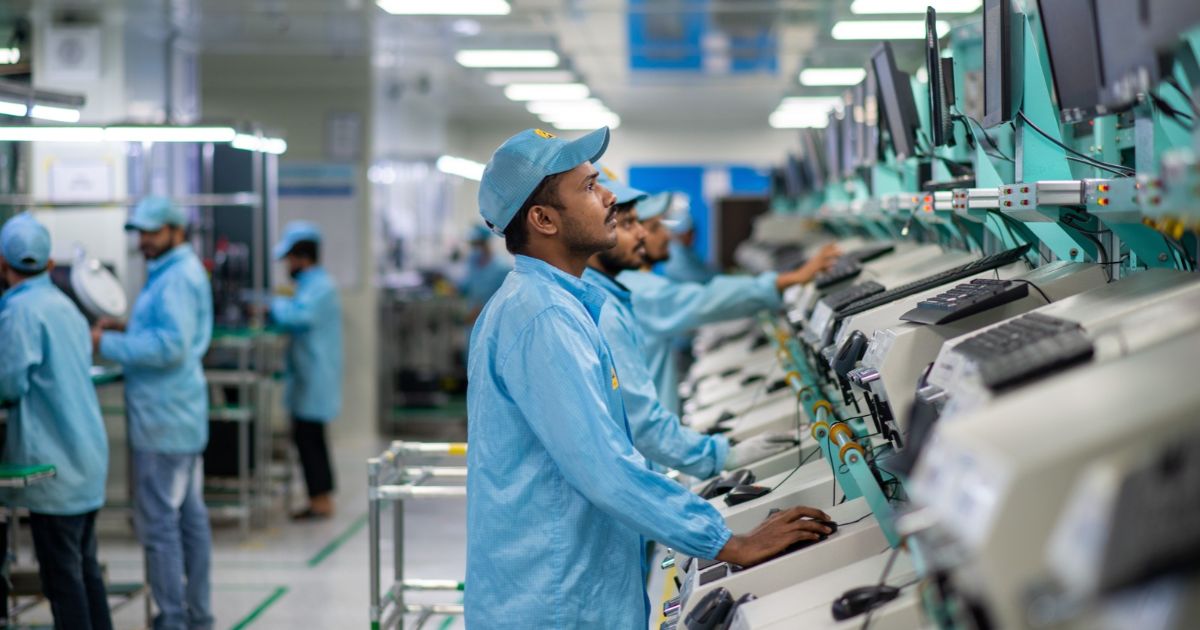
According to Canalys data as reported by India Briefing, India’s share of US smartphone shipments increased from 13 percent in Q2 2024 to 44 percent in Q2 2025. China’s share dropped from 61 percent to 25 percent.
But moving production to India does not automatically relocate the suppliers that support it. Manufacturers still need to ensure local suppliers can meet their requirements at a competitive cost and that the entire supply chain can deliver goods to market.
As projected in the DHL Trade Atlas 2025, India will contribute around 6 percent of additional global trade between 2024 and 2029, compared with 12 percent for China and 10 percent for the United States. DHL’s analysis of the country’s growing role in global trade also points to deeper integration into global supply chains: the DHL Globalization Tracker expects India’s average goods trade distance to reach 6,190 kilometers, reflecting a broader and more geographically diverse network of trading relationships.
How can companies build a more resilient supply chain in India?
Supply chain resilience is the ability to anticipate disruption, absorb its impact, and restore the flow of goods before production or customer commitments are seriously affected. Companies therefore need to identify the disruptions that could stop production or prevent an order from reaching its destination, then decide how they will respond before those disruptions occur.
DHL is putting resilience into the supply chain
DHL is putting resilience into the supply chain
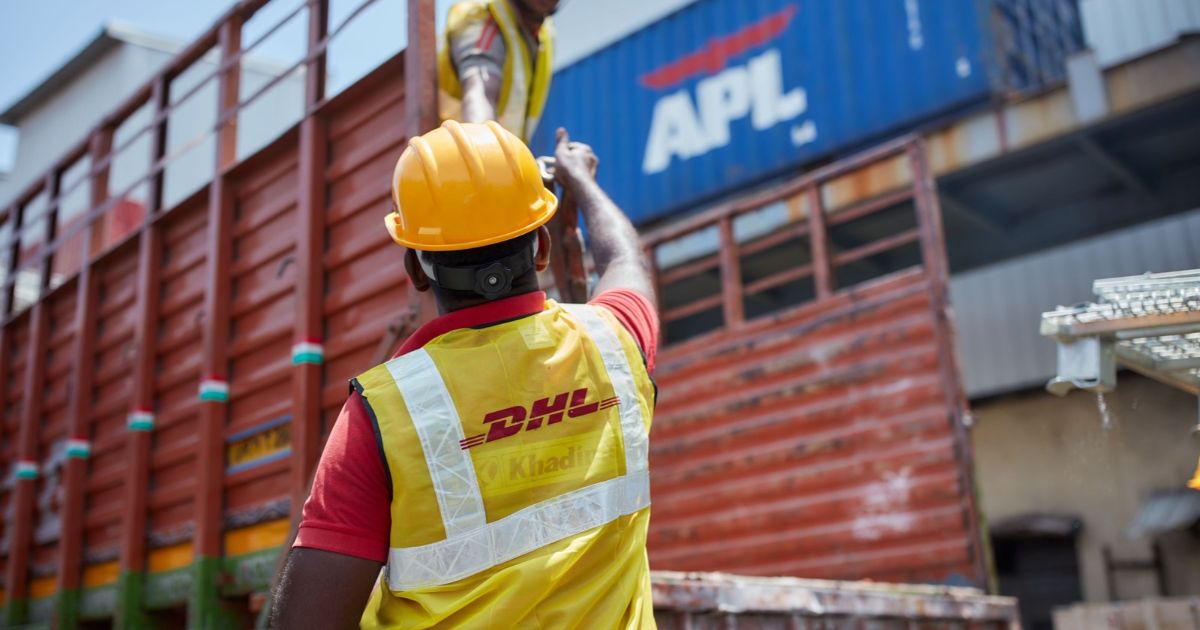
DHL is investing approximately €1 billion in the country by 2030 to expand capabilities for high-value sectors, upgrade infrastructure, and scale last-mile delivery centers.
Sector-specific networks can strengthen that foundation. DHL’s footprint in India spans express gateways and sorting infrastructure, specialized warehousing, healthcare cold chain facilities, freight forwarding capabilities, and nationwide last-mile networks. This includes:
- DHL Express’s Delhi gateway, which connects into a wider Asia Pacific network of approximately 1,000 facilities supported by around 810 flights per day.
- DHL Supply Chain operates more than 30 cold chain facilities in India, including its 150,000-square-foot Health Logistics Excellence Centre in Mumbai/Bhiwandi, while further investments are expanding specialized logistics infrastructure in Chennai and Mumbai.
- DHL is also establishing Electric Vehicle and Battery Logistics Centers of Excellence, beginning with a Free Trade Warehouse Zone in Chennai.
- Blue Dart’s infrastructure, network capacity, and nationwide last-mile delivery centers are also being upgraded to support growing e-commerce volumes.
Technology makes that infrastructure more responsive. Predictive AI and real-time risk scoring can flag trade disruption, component shortages, weather events, and regulatory bottlenecks earlier. Across warehouses, indoor robotics, 3D visualization, Internet of Things sensors, and control towers can give businesses the visibility and flexibility to move from a purely just-in-time model toward a more resilient just-in-case approach.
Investments and capabilities provide useful support, but each company still needs to translate them into practical decisions about suppliers, inventory, transport, and accountability. The following five steps can help companies prepare.
1. Know where essential supplies come from
Trace the materials and components your business relies on, including those that depend on imported energy, chemicals or other inputs. Pay particular attention to items that are difficult to replace or take a long time to source elsewhere.
2. Find backup suppliers and routes
A second supplier is useful only if it can meet the required specifications and production volumes within the necessary lead time. Assess alternative carriers, ports, and routes for availability and cost before they are needed.
3. Decide what you need to keep in stock
Holding extra stock ties up cash and costs money to store. It may be worth doing for critical components that are difficult to replace or take a long time to arrive. For items that are easy to source, the extra stock may cost more than it saves.
4. Know when to change your transport plans
Decide which shipments can arrive later by sea and which ones might need a different route or mode of transportation. Also, agree when the extra cost of changing plans is justified by the risk of late delivery or production stoppages.
5. Make sure personnel can act on shipment information
Information about vessel movements, port conditions, inventory, and supplier commitments is useful only when personnel can respond to it. Assign someone who can approve a route change or emergency purchase, and agree in advance how customers will be notified and who pays any extra costs under the contract.
Logistics providers can support these steps by arranging transport, tracking shipments, and handling customs when goods need to take another route.
More importantly, businesses need a logistics provider that understands their routes, dependencies, and service commitments, and can put alternatives into action when disruption occurs. True supply chain resilience is not simply reacting faster. It is building the infrastructure, visibility, and decision rights to reroute with agility.

ALSO WORTH READING




 English
