



How can India build a more resilient pharmaceutical supply chain?

Key takeaways
- Indian manufacturers supply 47 percent of generic prescriptions filled in the US, making the country vital to the global medicine supply.
- China supplies 73.71 percent of India’s key pharma inputs, highlighting upstream concentration risk.
- Resilience means diversifying suppliers, routes and sourcing, backed by stronger visibility and contingency planning.
India is one of the world’s largest sources of affordable medicines. Its pharmaceutical manufacturers supply 47 percent of generic prescriptions filled in the US and 15 percent of America’s biosimilar volume.
However, much of this production still depends on imported inputs, a significant share of which comes from China. Even if finished-drug production is relocated to India, the industry may remain dependent on concentrated sources of critical pharmaceutical inputs further upstream.
Companies need to understand where their suppliers source ingredients, and have alternative suppliers and transport routes ready if those supplies are interrupted.
What are APIs in medicines and why are they important?
A medicine’s therapeutic effect comes from one or more active pharmaceutical ingredients (APIs), which are produced using chemical inputs sourced earlier in the production chain.
Key starting materials (KSMs) are the compounds used at the beginning of this process, while drug intermediates are produced during the chemical stages that follow.
Given the complexity of the supply chain, the country where a medicine is manufactured does not necessarily tell buyers where its critical ingredients come from. An Indian company, for instance, can produce an API or finished medicine locally but still import the chemicals needed to make it.
How dependent is India on China for APIs?
According to government figures, China supplied 73.71 percent of India’s imports across 200 categories of APIs, bulk drugs, and drug intermediates in FY2024–25. Specifically, India imported around US$4.35 billion worth of these products during the financial year, of which US$3.20 billion came from China.
The dependence is even higher at the individual product level. Government data published in March 2026 shows that China supplied at least 70 percent of India’s imports for various APIs in FY2023–24 and FY2024–25. Certain APIs were sourced almost exclusively from China.
| India’s imports of bulk drugs and drug intermediates by source | Share (percent) |
|---|---|
| China | 73.71 |
| European Union | 13.64 |
| Singapore | 2.49 |
| United States of America | 1.96 |
| Japan | 1.82 |
| Switzerland | 1.03 |
| Mexico | 0.80 |
| United Kingdom | 0.76 |
| Hong Kong | 0.53 |
| Malaysia | 0.51 |
| Others | 2.75 |
Because of this concentration, an Indian manufacturer buying an ingredient from several domestic suppliers may still face the same upstream exposure if those suppliers rely on the same overseas source. A shortage of the ingredient can ripple across production lines at once.
How did India’s dependence on China develop?
India’s reliance on Chinese pharmaceutical inputs grew out of domestic manufacturers’ difficulty competing with China’s lower production costs.
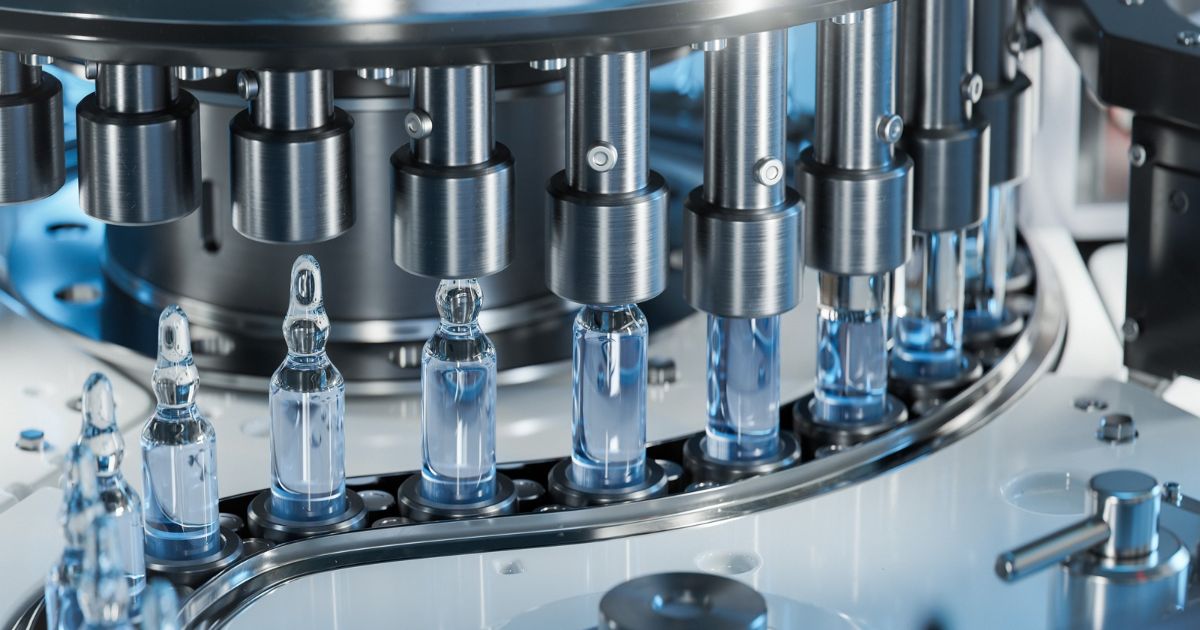
Research by the Observer Research Foundation, drawing on economist Sudip Chaudhuri’s work, traces the growth of China’s share of India’s bulk drug imports. It was less than 1 percent in 1990–91 and exceeded 20 percent by the mid-1990s, eventually reaching roughly two-thirds by 2020.
What is India doing to strengthen its pharmaceutical supply chain?
India is expanding domestic production of critical pharmaceutical ingredients through Production Linked Incentive (PLI) schemes and bulk drug parks. These initiatives are intended to strengthen local capacity, diversify upstream supply, and reduce manufacturers’ exposure to disruptions affecting overseas sources.
The PLI Scheme for Bulk Drugs offers financial incentives for producing 41 identified critical products in India. According to the Department of Pharmaceuticals, domestic manufacturers have set up an annual capacity of around 56,800 metric tons for 28 of these products.
The government has also approved bulk drug parks in Andhra Pradesh, Gujarat, and Himachal Pradesh, supporting each with up to ₹1,000 crore in central assistance. These parks will share facilities such as power, water, solvent recovery, and effluent treatment to lower the cost of setting up and running manufacturing plants.
Domestic capacity is growing, but it covers only a portion of the industry’s requirements. The bulk drug parks are also still under development. To win a larger share of the domestic market, Indian producers will need to compete with more established overseas manufacturers on production costs.
What happens if upstream concentration persists?
When critical ingredients come from a concentrated base of suppliers, Indian pharmaceutical manufacturers are highly exposed to production risks.
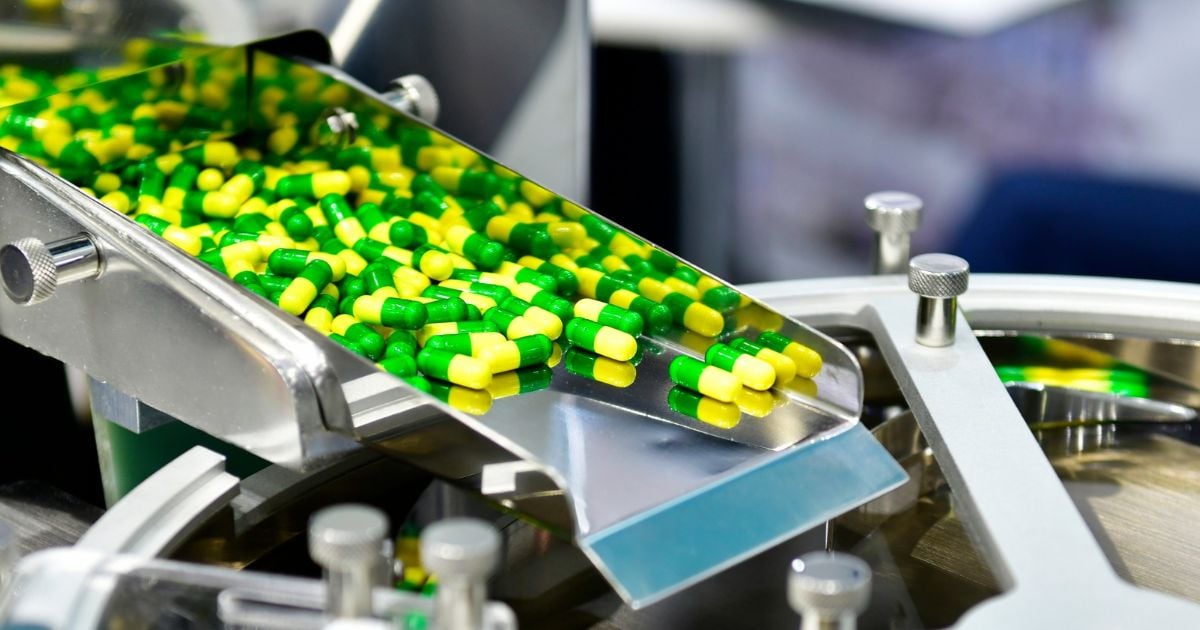
A company might buy an ingredient from several Indian manufacturers without knowing that they all obtain an upstream input from the same overseas supplier, market, or production cluster. Having several direct suppliers offers little protection if they share the same source.
Finding and qualifying a backup supplier is often slow. Pharmaceutical ingredients must meet strict quality and regulatory requirements before manufacturers can use a new source, and production can be affected if existing stocks run low in the meantime.
How is DHL helping strengthen pharmaceutical supply chains in India?
How is DHL helping strengthen pharmaceutical supply chains in India?
Reducing dependence on concentrated ingredient sources takes time. In the meantime, pharmaceutical companies also need logistics networks that can protect product integrity, provide visibility, and keep critical materials moving when a route or facility is disrupted.
DHL is strengthening this operational layer through DHL Health Logistics, which brings together temperature-controlled transportation, specialized warehousing, qualified trade lanes, and real-time shipment monitoring. Its pharmaceutical solutions include Good Distribution Practice (GDP)- and Good Practice (GxP)-compliant operations, proactive intervention during temperature excursions, and tools such as DHL LifeTrack for monitoring time- and temperature-sensitive shipments.
In India, DHL operates more than 30 cold chain facilities, including a 150,000-square-foot Health Logistics Excellence Centre in Bhiwandi.
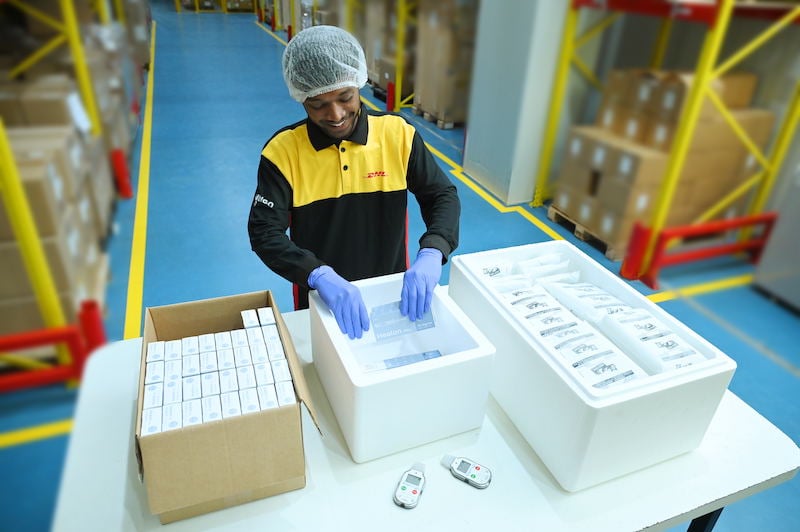
Furthermore, DHL is investing approximately €1 billion in India by 2030 to expand infrastructure and capabilities for high-value sectors.
The aim is not simply to move pharmaceuticals faster. Greater visibility can help companies detect delays or temperature risks earlier, while access to different routes and transport modes gives them more options when established routes or services are disrupted. Specialized handling processes and temperature-controlled infrastructure also help preserve the quality of APIs, medicines, vaccines, and clinical trial materials throughout the journey.
These logistics capabilities cannot replace supplier diversification or additional API capacity. They can, however, make pharmaceutical supply chains more resilient and adaptable while manufacturers qualify alternative sources, adjust inventory, and reduce their exposure to individual routes or facilities.
What should pharmaceutical supply chain leaders do?
The first task is to find out where critical ingredients come from, including those purchased by direct suppliers. Procurement departments need to establish whether different suppliers have genuinely independent sources or ultimately rely on the same overseas manufacturers, facilities, or production clusters.
Companies sourcing from India must also examine the origins of the ingredients their Indian partners use. A change in the location of finished-drug production does not, by itself, reduce exposure to concentrated sources further upstream.
An alternative supplier must handle the required production volumes and meet strict pharmaceutical quality standards. Likewise, companies must calculate the time needed to qualify a new source and secure deliveries if their usual supplier cannot meet demand.
Transport is also part of this review. Manufacturers must document the exact routes ingredients take to reach their manufacturing facilities and arrange alternative shipping routes if normal services are disrupted. Contingency plans must also consider the impact of extended travel times, together with the specific storage or handling conditions needed to maintain product integrity.
Inventory decisions must consider how easily an ingredient can be sourced elsewhere, because stockpiling every imported ingredient is financially and operationally impractical. Instead, reserve levels should be based on how difficult an ingredient is to source, how long replacement supplies take to arrive, and how long the ingredient can be stored.
Digital systems can alert pharmaceutical companies to supplier delays and quality problems while making it easier to forecast demand and manage inventory. In warehouses, automated storage and retrieval systems can improve inventory accuracy and operational efficiency.
India’s growing domestic manufacturing capacity offers pharmaceutical companies additional local sources of medicines and ingredients. Its contribution to supply chain resilience will depend on how far critical ingredient supplies can be diversified across genuinely independent domestic and overseas sources.

ALSO WORTH READING







 English