



Geographic tailwinds are building resilient supply chains beyond China

Global trade has rarely felt more volatile. Tariffs, geopolitics, pandemic shocks, logistics bottlenecks, extreme weather, and fast-changing regulations have turned once-stable supply chains into moving targets. For business leaders, the question is no longer how to optimize for cost alone, but how to build supply chains that can absorb disruption and adapt quickly.
Consequently, supply chain diversification and the China Plus X strategy have become central to long-term planning. Instead of relying heavily on a single production hub, companies are spreading manufacturing across multiple countries to reduce risk and improve resilience and flexibility.
Why China Plus X matters more than ever
For decades, China served as the world’s manufacturing engine with its scale, infrastructure and skilled workforce. While China remains a critical manufacturing base, experience has shown that relying on a single country creates significant risk. Tariffs, trade tensions, pandemic disruptions, and rising labor costs have revealed the risks of overreliance on a single country. And in an era of overlapping risks, even relying on a China Plus One strategy and a single backup option is no longer enough to ensure trade continues to flow smoothly.
China Plus X expands this approach by creating multiple production options across several countries. This multi-shoring approach builds flexibility, allowing businesses to shift volumes quickly in response to tariffs, regulatory changes, logistics disruptions, or market fluctuations.
Crucially, China Plus X is not about moving away from China, but about building supply chain resilience around the manufacturing giant. By expanding across multiple countries, companies plan and act proactively to spread risk while supporting long-term growth, so they do not have to rely solely on reactive firefighting when the unexpected happens. The result is a more resilient supply chain that can reroute shipments, rebalance production and maintain customer commitments even when global conditions change unexpectedly.
Despite ongoing geopolitical tensions, economic uncertainty, and supply chain disruptions, the world is still experiencing strong and enduring global trade flows. According to the DHL Global Connectedness Report 2026, globalization reached a record high in 2022 and has not changed appreciably through 2025. For supply chain leaders, this reinforces a critical reality: the goal is not to reduce global exposure, but to manage it more intelligently.
By combining connectivity with diversification, companies can remain close to customers and markets worldwide while building the flexibility needed to operate with confidence in an increasingly complex trade environment.
The top five emerging markets shaping global manufacturing
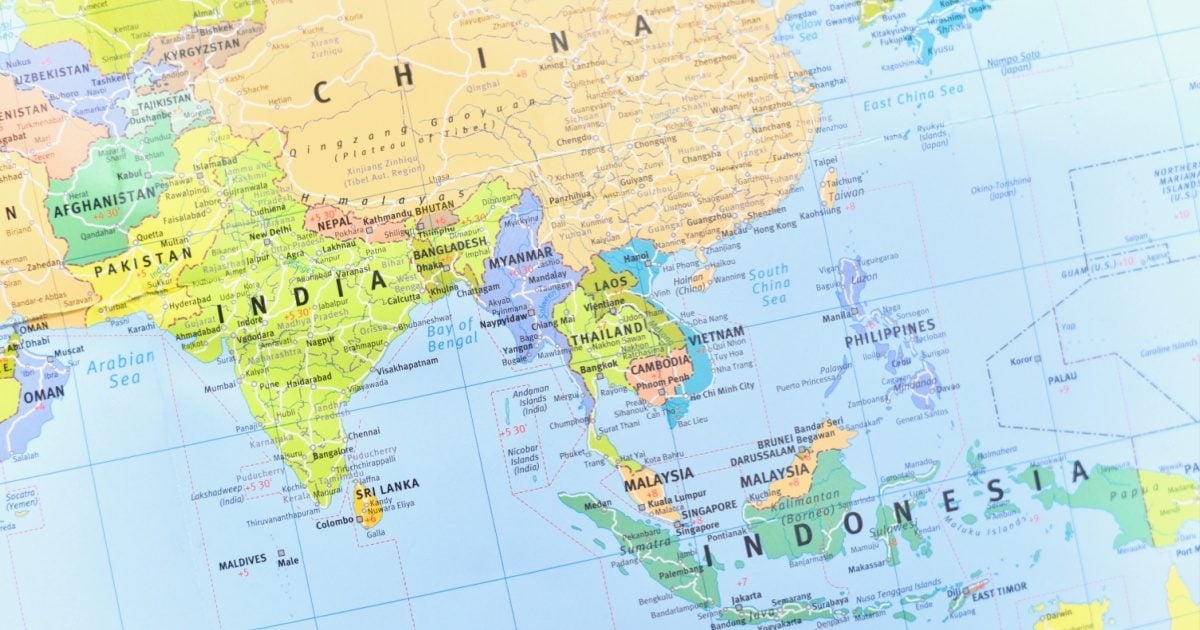
India, Indonesia, Malaysia, Thailand, and Vietnam together form a powerful production corridor that supports resilience, scalability, and regional connectivity.
India: Scale, speed and high-tech momentum
India is rapidly becoming one of the world's most important manufacturing hubs, particularly for electronics, semiconductors, automotive, and pharmaceuticals. Supported by government incentives, massive infrastructure investment, and a young workforce, India offers both scale and long-term strategic stability.
Major technology firms are expanding aggressively in India. Apple continues to ramp up iPhone assembly through partners such as Foxconn and Tata Electronics. In March 2025 alone, Foxconn exported US$1.3 billion worth of Apple devices from India to the United States. Samsung is reportedly shifting part of its smartphone production from Vietnam to India in response to new tariff structures, while Google is in discussions to move Pixel phone manufacturing to India.
Semiconductor leaders, including NXP and Lam Research, have also announced major investments, reinforcing India’s rise as a high-value manufacturing hub.
Indonesia: Industrial depth and resource advantage
Indonesia’s exports reached US$290 billion in 2022, marking the country’s highest export performance on record. Investments in metals processing, chemicals, electric vehicle batteries, and consumer goods manufacturing are transforming the country into a major industrial player.
With abundant natural resources, a large domestic market, and growing logistics infrastructure, Indonesia plays a critical role in building diversified and resilient supply networks across Southeast Asia.
Malaysia: High-tech manufacturing and semiconductor leadership
Malaysia is a key player in electronics and semiconductor manufacturing, accounting for around 13 percent of the global chip assembly, packaging and testing market, which positions the country as a critical node in global value chains. This strength is reinforced by strong foreign direct investment, with Malaysia recording a record RM378.5 billion in approved investments in 2025, nearly half of which came from international sources.
Extensive trade agreements, including CPTPP and RCEP, combined with its strategic location at the heart of Southeast Asia and advanced logistics infrastructure, further support its role as a high-value manufacturing and export hub.
Large-scale investments in logistics hubs, cold chain facilities and digital trade infrastructure further enhance Malaysia’s position within diversified supply chain networks. DHL’s expanded footprint, including new logistics hubs and certified life sciences facilities at Kuala Lumpur International Airport, reflects growing demand across high-growth sectors such as electronics, life sciences, and e-commerce.
Thailand: Advanced manufacturing and logistics connectivity
Thailand remains a regional leader in automotive, electronics, and food manufacturing. Strong export growth, infrastructure investment, and advanced logistics networks have reinforced its role as a strategic production hub.
With robust sea, air, and multimodal connectivity, Thailand enables manufacturers to maintain fast access to global markets while supporting high volume and high value production.
Vietnam: digital infrastructure growth and tech-driven expansion
Vietnam has become one of Southeast Asia’s fastest-growing digital infrastructure hubs, powered by rapid data center investment and an expanding tech ecosystem. In 2023, the country’s data center market was valued at US$685 million and was projected to surpass the average growth of APAC in the following five years, with strong momentum from domestic telecommunications and digital operators such as Viettel, VNPT, FPT, CMC, and VNG, alongside rising global interest from companies such as Amazon, Microsoft, Google, and Alibaba.
With regional low construction costs and new undersea cable routes underway, Vietnam is increasingly central to China Plus X diversification, especially for cloud services, AI workloads and digital platforms. Large-scale projects such as Viettel’s new hyperscale developments signal the country’s growing capacity to support global tech operations and high-performance computing needs.
Asia is powering the supply chain resilience
The Asian manufacturing boom reflects more than cost advantages. Strong trade agreements, expanding infrastructure, supportive government policies, and young workforces are creating powerful geographic tailwinds.
India brings scale, innovation, and domestic demand. Vietnam’s rapid technological growth and Indonesia’s industrial expansion illustrate how companies are building multi-country production networks that reduce dependence on any single location. Thailand and Malaysia boast advanced manufacturing capabilities and sophisticated logistics, thereby completing a resilient regional ecosystem.
Together, these markets allow companies to segment production intelligently, placing different product lines in locations best suited for speed, cost, complexity, and regulatory requirements.
Turning diversification into competitive advantage

Businesses that adopt the China Plus X strategy can shift production in response to tariff changes, logistics disruptions, demand fluctuations, and geopolitical developments without sacrificing service quality.
DHL supports customers throughout this transformation with integrated logistics solutions spanning freight forwarding, customs, warehousing, supply chain design, and e-commerce. By combining deep local expertise with a global network, DHL helps businesses connect production hubs seamlessly, maintain compliance, and unlock the full value of geographic diversification.
By leveraging these geographic tailwinds and embracing China Plus X, companies can build supply chains that are flexible, future-ready, and fundamentally stronger. In doing so, they transform uncertainty into opportunity and complexity into a competitive advantage.
ALSO WORTH READING







 English