



Powering the world’s new energy chain from grid to great

As the world accelerates its transition to reduce greenhouse gas emissions, Battery Energy Storage Systems (BESS) have emerged as a cornerstone of the new energy strategy.
BESS store electricity produced during periods of low demand or peak generation and releases it when needed—bridging the gap between energy generation and consumption. These systems are critical to handle the intermittency of renewable sources such as wind and solar, thus ensuring grid stability by balancing fluctuations in electricity supply and demand.
"Renewable energy production and the resulting energy availability, whether from onshore wind, or solar, are typically supported by BESS units to balance supply and demand. By striking this balance, global networks will literally be empowered to make the needed change,” said Martyn Lawns, Senior Vice President, Growth Initiative—New Energy, DHL Group.
As more countries ramp up their ambitious climate targets, global supply chains play a pivotal role in delivering the technology that powers this transformation.
Building a BESS case scenario
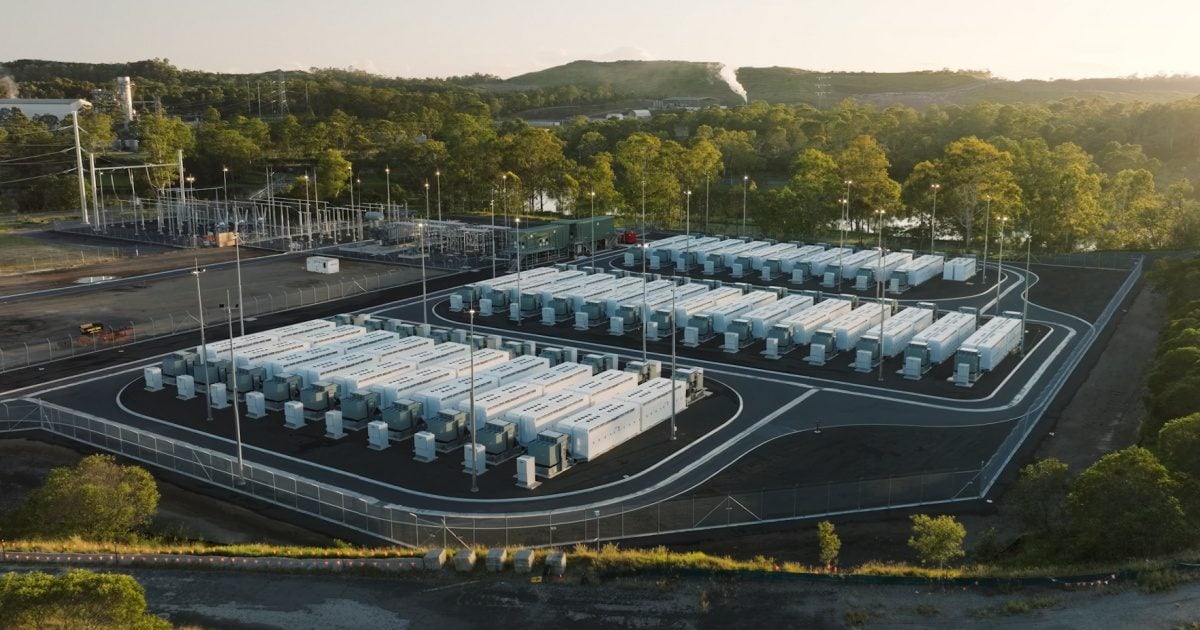
The global market for battery energy storage systems is driven by a growing focus on grid decarbonization, deeper integration of renewable energy, and rising demand for flexible and long-duration energy storage solutions.
The sector’s global market size was estimated at approximately US$13.19 billion in 2025 and is projected to reach US$99.67 billion by 2033, growing at a CAGR of 28.3 percent from 2026 to 2033.
Among the various BESS markets, the UK is experiencing exponential growth. The BESS total operational capacity in the U.K. has already reached 6GW, with a projected 27GW to be online within the next three years.
On top of this, there is a growing need to integrate renewable energy into the grid more effectively, which now supplies 42.9 percent of the UK’s electricity as of September 2025. This has highlighted the crucial part played by BESS to store the excess energy generated and dispatch it on demand.
The UK’s accelerated goals toward BESS adoption need to be met in record time, and battery manufacturers are stepping in to support this aspect. For example, CATL delivered 663MWh of battery cells to the UK, while BYD contributed 590MWh. Together, both companies account for 72 percent of the UK’s BESS market share.
Overall, the Asia-Pacific battery energy storage systems industry held the largest share—approximately 44.5 percent in 2025—driven by the rapid deployment of renewable energy, large-scale grid modernization programs, and expanding electrification initiatives. China leads the region, supported by strong domestic manufacturing capacity, ambitious solar and wind installation targets, and policy frameworks designed to integrate energy storage across both utility-scale and distributed energy networks.
Across the region, momentum continues to build. Japan, South Korea, and Australia are accelerating the adoption of energy storage to improve grid flexibility, enable peak shifting, and support emerging clean hydrogen pathways. India, meanwhile, is scaling up battery storage to stabilize grids increasingly dominated by renewable energy while expanding microgrids across remote and rural regions.
Rising demand for grid reliability, rapid expansion of digital infrastructure, and growing public and private investment in clean energy continue to position Asia-Pacific at the forefront of global BESS capacity additions.
Taking the BESS approach for rapid new energy growth
As utilities shift away from coal- and gas-fired generation toward solar, wind, and other renewables, storage systems capable of delivering reliable power over hours—and increasingly days—are becoming critical to maintaining grid stability.
A wide range of BESS technologies, including lithium-ion batteries, flow batteries, and emerging chemistries, are enabling scalable and cost-effective deployment across utility-scale, commercial, and industrial applications. Government incentives supporting grid modernization, carbon reduction mandates, and energy storage demonstration projects across North America, Europe, and parts of the Asia-Pacific region are further strengthening adoption.
But with a wider adoption, comes greater complexity in deployment. Regulations and compliance matters are added into the equation, which requires a robust and agile logistics approach to manage the complex supply chain.
How can the world meet the rising demand for BESS? More importantly, what do companies need to manage the complexities involved in its rapid deployment? “The answer is DHL’s New Energy logistics—connecting supply with demand across the New Energy value chain,” highlighted Lawns. The unified sector brand combines the expertise of DHL Express, DHL Global Forwarding, and DHL Supply Chain across eight segments: Wind, Solar, EV & Batteries, BESS, EV Charging, Grid, Alternative Fuels, and Hydrogen. Its aim is to support the deployment of energy infrastructure required for the energy transition, turning logistical complexity into coordinated execution. These efforts also align with DHL Group’s Strategy 2030, which emphasizes sustainability, digitalization, and resilience.
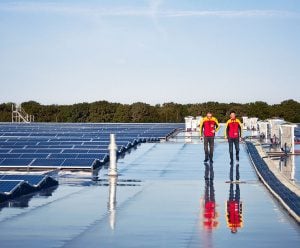
The energy transition is not just a global trend—it is a strategic imperative for DHL Industrial Projects. The logistics firm was instrumental in the delivery of over 200 ESS battery containers from China to Europe, the U.S. and Australia for a major battery manufacturer. The customer tapped into DHL’s compliance expertise in dangerous goods, ensuring regulatory adherence for door-to-door transport at a controlled temperature of 23 degrees Celsius. DHL’s experience in import clearance, together with its agility to optimize routes and adapt to delivery location changes, provided customers with seamless, compliant, and time-sensitive delivery—no matter how plans evolved.
Plugging into the BESS Supply Chain
“Battery energy storage is not just a technical solution—it is a strategic enabler and the linchpin of a resilient, low-carbon grid,” emphasized Lawns. For DHL, it is a growth opportunity that aligns with publicly stated climate and energy transition objectives.
As the world continues to scale its BESS infrastructure, supported by manufacturing and domestic innovation, logistics will play a decisive role in ensuring timely, efficient, and secure delivery of energy assets.
The convergence of energy and logistics is no longer a vision—it is a reality, delivered by DHL as it supporting the global energy sector through logistics services.
ALSO WORTH READING







 English