


Battery State-of-Health (SOH) Tracking
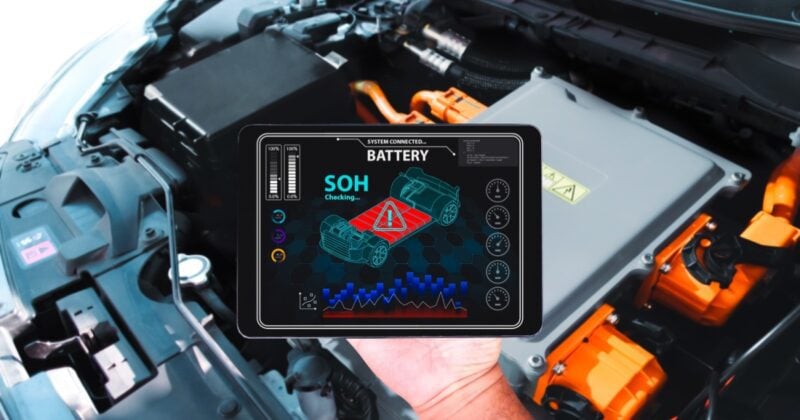
What is Battery State-of-Health (SOH) Tracking?
Battery state-of-health (SOH) tracking refers to the monitoring and measurement of a battery’s actual condition as compared to its original state.
A new battery starts at 100% health, and its SOH gradually declines over time due to factors including usage, aging, temperature exposure, and charging patterns. Stakeholders track SOH to determine whether a battery can still perform its intended function safely and reliably.
Why is Battery State-of-Health (SOH) Tracking important?
In sectors such as electric vehicles, energy storage, and logistics, batteries are high-value and safety-critical assets. SOH tracking helps prevent unexpected failures and supports warranty and lifecycle decisions. Importantly, it ensures that batteries operate within safe limits.
Organizations can also improve safety, extend asset life, reduce downtime, and make informed decisions about maintenance, reuse, or replacement. SOH tracking also supports regulatory compliance and enables more transparent reporting across the battery value chain.
How does Battery State-of-Health (SOH) Tracking work?
SOH is calculated and determined using data collected from battery management systems (BMS) that utilize sensors and analytics platforms. These BMS analyze factors such as charge cycles, capacity fade, internal resistance, temperature history, and voltage behavior. Advanced algorithms then estimate remaining usable battery life and overall health, often updating this assessment continuously during operation or transport.
Where is Battery State-of-Health (SOH) Tracking commonly used?
SOH tracking is widely used in electric vehicle fleets, battery energy storage systems (BESS), and the logistics of lithium-ion batteries. SOH tracking is especially important during transport, storage, and second-life applications, where understanding battery condition helps manage safety risks and optimize asset value.




 English